First patient treated with Medtronic Altaviva following FDA nod
Medtronic (NYSE: MDT)+
today reported the first patient treated with its Altaviva neuromodulation device for urge urinary incontinence.

Medtronic (NYSE: MDT)+
today reported the first patient treated with its Altaviva neuromodulation device for urge urinary incontinence.

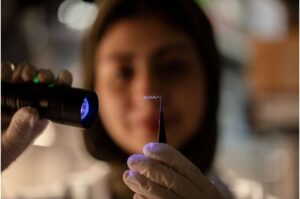
RMIT researchers have created an experimental 3D-printed diamond–titanium device that generates electricity from flowing liquid and receives wireless power through tissue making it possible to remotely sense changes in flow.

As a wound heals, it goes through several stages: clotting to stop bleeding, immune system response, scabbing, and scarring. A wearable device called “a-Heal,” designed by engineers at the University of California, Santa Cruz, aims to optimize each stage of the process.

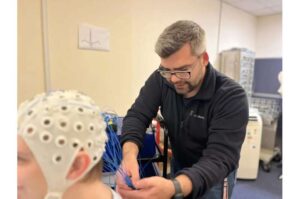
Maintaining balance while walking may seem automatic—until suddenly it isn’t. Gait impairment, or difficulty with walking, is a major liability for stroke and Parkinson’s patients. Not only do gait issues slow a person down, but they are also one of the top causes of falls. And solutions are often limited to time-intensive and costly physical therapy.

Cionic announced today that the FDA granted clearance for its second-generation product, the Neural Sleeve 2.

Researchers at the University of Osaka have developed a minimally invasive method for recording brain activity through blood vessels.

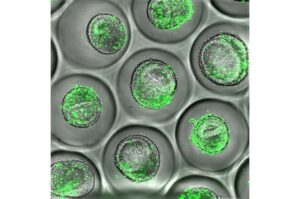
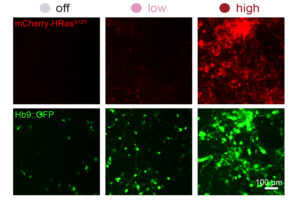
Researchers from the Department of Biomedical Engineering at UNIST and the Center for Genomic Integrity at the Institute for Basic Science (IBS) have announced an advance in cancer gene therapy.

Researchers at Dana-Farber Cancer Institute have developed a diagnostic tool that could transform the way acute leukemia is identified and treated. The tool, called MARLIN (Methylation- and AI-guided Rapid Leukemia Subtype Inference), uses DNA methylation patterns and machine learning to classify acute leukemia with speed and accuracy

In a new study that combines synthetic biology with cancer immunotherapy, researchers from the Yong Loo Lin School of Medicine, National University of Singapore (NUS Medicine) and Central South University in China have developed an engineered strain of gut-homing bacteria that stimulates potent antitumor immune responses against colorectal cancer (CRC).

A new eyedrop has shown early success in delivering protective compounds to where they’re needed most in the eye, raising hopes for less invasive treatment of serious vision conditions.