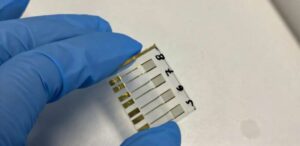
Biosensor works with blood samples to identify pancreatic cancer in early stages
Brazilian researchers have developed an electrochemical sensor that can detect pancreatic cancer in its early stages.

Brazilian researchers have developed an electrochemical sensor that can detect pancreatic cancer in its early stages.
Researchers from Boston University’s Chobanian & Avedisian School of Medicine, College of Arts & Sciences, College of Engineering and Faculty of Computing & Data Sciences have developed a tool called PhysMAP to separate the “voices” of individual cell types within a crowd of electrical noise by combining several complementary features of each type’s electrical signature.

Combining microchip engineering techniques with cutting-edge gene profiling, scientists at Columbia University have developed a new way to study drug responses in living slices of human brain tumor cells.
A new noninvasive neurostimulation technique capable of reaching deep regions of the brain has been used to elucidate the brain’s pain mechanisms, with promising clinical applications in neurology and psychiatry.
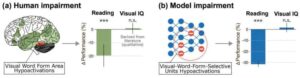
For the first time, researchers have used an advanced AI model that understands both images and language, allowing them to model dyslexia, paving the way for potential new treatments.

In the U.S., Moderna withdrew its approval application for the combination vaccine in May last year and the timeline for resubmission remains uncertain.
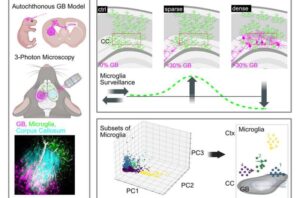
Researchers from DZNE, University Hospital Bonn and the Cluster of Excellence ImmunoSensation at the University of Bonn have captured this infiltration process in the living brain with advanced microscopy.
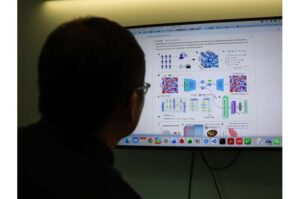
Oregon Health & Science University researchers have developed a first-of-its-kind method to predict cancer patient survival using advanced molecular data from individual cells.
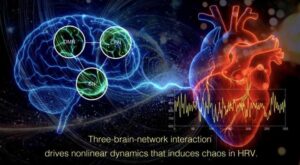
A team of researchers at Kyoto University have demonstrated that the chaotic component of heartbeat variability is uniquely sensitive to cognitive brain activity. Conventional heart rate variability, HRV, indices show no consistent response, whereas chaos-based measures reveal clear and reproducible changes, providing a new noninvasive indicator of brain-heart interaction.
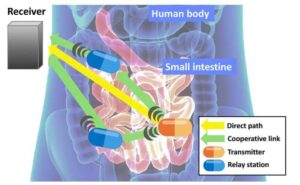
A research group led by Associate Professor Takumi Kobayashi and Professor Daisuke Anzai at the Graduate School of Informatics, Osaka Metropolitan University, focused on optimizing signal transmission separately for each frequency, allowing multiple implants to coordinate their signals using ultra-wideband (UWB) communication.