Blog

- NOVEL DISCOVERIES

Saliva analysis could reveal risk of developing cancer, heart disease or Parkinson’s using molecular markers

A research team led by the University of the Basque Country has identified hundreds of molecular markers in saliva that could reveal the risk of a person developing major diseases such as cancer, cardiovascular diseases, diabetes and neurodegenerative diseases. Their results, published in npj Genomic Medicine, lay the foundation for the development of a powerful, non-invasive tool for early diagnosis and precision medicine.

Read More »

Electric currents help paralyzed rats walk again after spinal cord damage

Researchers at Chalmers University of Technology in Sweden and the University of Auckland in New Zealand have developed a groundbreaking bioelectric implant that restores movement in rats after injuries to the spinal cord. This breakthrough offers new hope for an effective treatment for humans suffering from loss of sensation and function due to spinal cord injury.

Read More »

Handy pen-like tool could help detect opioids from the skin

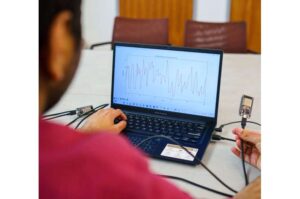
Opioids like fentanyl, morphine and oxycodone are the drugs most linked to overdoses in the U.S. Typical screening methods for drug usage involve collection of blood, saliva or urine samples. Now, in Analytical Chemistry, researchers demonstrate a pen-like tool that can quickly and non-invasively collect molecules from the skin’s surface to be screened for opioids with mass spectrometry.

Read More »

Ocutrx Technologies Inc. Unveils Surgery Breakthrough: First-Ever Technology to Make Blood Translucent During Surgery

IRVINE, Calif. and ABU DHABI, UAE, June 24, 2025 /PRNewswire/ — Ocutrx Technologies Inc. (“Ocutrx”), through its R&D division Genius Labs, today unveiled a major surgical innovation: the ability to render blood translucent in real time during surgery. This patent-pending advancement enables surgeons to see through pooled blood without the need for suction or irrigation—a world first. The technology, called HemoLucence™, will be a feature of the OR-Bot™ 3D Surgical Microscope System, which is scheduled to enter clinical trials in 2025 or 2026.

Read More »