Flexible organic electrodes convert infrared light into nerve signals in damaged retinas
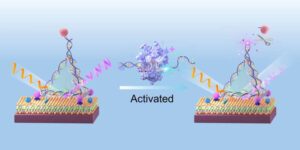
In an important step toward visual prostheses, biocompatible electrodes can convert infrared light into nerve impulses, as demonstrated by a team at TU Wien

In an important step toward visual prostheses, biocompatible electrodes can convert infrared light into nerve impulses, as demonstrated by a team at TU Wien

Not long ago, the idea of diagnosing a disease with a droplet of blood was considered a pipe dream. Today, this technology could soon become a reality.

3D printed blood vessels on glass that mimic blood vessel anatomy and the fluid dynamics of blood flow could be an invaluable tool in studying the causes of stroke, new research from a University of Sydney team has found and it has already led to important insights.

Colonoscopies may one day have some competition—researchers report in ACS Sensors that they’ve developed a sensor made of tiny microspheres packed with blood-sensing bacteria that detect markers of gastrointestinal disease. Taken orally, the miniature “pills” also contain magnetic particles that make them easy to collect from stool.

Columbia University researchers are the first to show that focused ultrasound—a noninvasive technique that uses sound waves to enhance the delivery of drugs into the brain—can be safely used in children being treated for brain cancer.

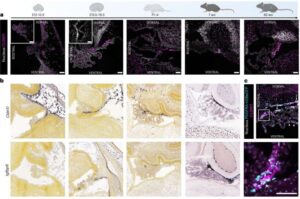
Temporarily anesthetizing the retina briefly reverts the activity of the visual system to that observed in early development and enables growth of responses to the amblyopic eye, new research shows.

Levita Magnetics has received FDA 510(k) clearance for its Magnetic Surgical System (MSS) to be used in certain pediatric surgeries, with the first U.S. surgery performed at Cleveland Clinic Children’s earlier this month.

A decade ago, at age 55, Don Lewis suffered a stroke in his sleep. When he woke up, he couldn’t move his left arm or leg. Lewis’s neighbor realized his truck hadn’t moved in two days and called 911 for a welfare check. When paramedics found him, he was paralyzed on one side.

A new study led by researchers from Murdoch University’s School of Psychology, Personalized Medicine Center, and Center for Healthy Aging, Health Futures Institute has found that heart rate variability biofeedback can significantly reduce symptoms of both PTSD and chronic pain—two conditions that frequently co-occur and are notoriously difficult to treat together.

A new study provides a powerful way to study infections in environments that closely mimic human organs.