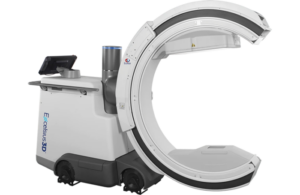
Globus Medical wins CE mark for Excelsius3D imaging system
Globus Medical (NYSE: GMED) has secured a CE mark for its Excelsius3D intelligent 3-in-1 imaging system for spine and cranial procedures.

Globus Medical (NYSE: GMED) has secured a CE mark for its Excelsius3D intelligent 3-in-1 imaging system for spine and cranial procedures.
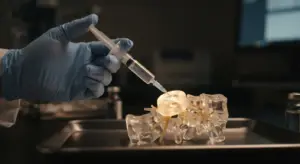
Newly Issued Patent Covers Methods of Promoting Disc Regeneration Using Components Derived from Stimulated Fibroblasts
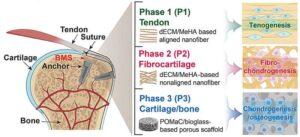
Researchers have developed a “scaffold” that mimics natural tissue and could lead to more durable rotator cuff repairs, including for large injuries and cases involving bone and tissue degeneration that are often the most difficult to fix. Devised by a team at the Perelman School of Medicine at the University of Pennsylvania, the new system was detailed in Science Advances.
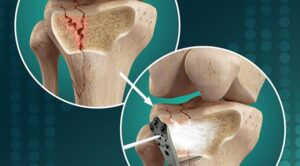
Animal trials show cartilage repair within four weeks following a single injection of chondrocyte spheroids
BALTIMORE, Aug. 14, 2026 /PRNewswire/ — Nanochon, a medical device company developing Chondrograft™, a novel patented implant for the treatment of articular cartilage defects of the knee, today announced that it has received regulatory approval from Panamá’s Ministry of Health to initiate its First-in-Human (FIH) clinical study in Panamá.
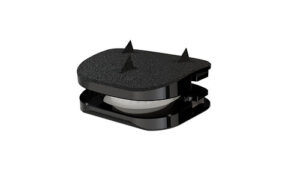
GENEVA, Aug. 11, 2026 /PRNewswire/ — Spineart announces that the BAGUERA® C cervical disc has received FDA approval for 1 and 2 contiguous levels, expanding access in the United States to a motion-preserving solution for patients suffering from cervical disc disease.

Specialized cells in the human body make biological trade-offs to perform certain jobs. Because the adult human heart cannot repair itself the way skin does, scientists have studied ways to “reprogram” heart cells to regenerate after heart attacks.

Saber-C AVIA is a zero-profile construct providing biomechanical stability similar to that of traditional plate systems.
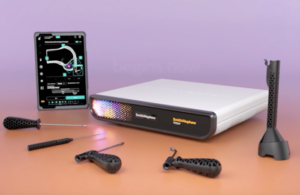
Smith+Nephew (NYSE:SNN) announced today that the FDA granted de novo clearance for its TESSA spatial surgery system.
The technology offers a dual-sided design with a nonporous underside and porous polyethylene structure on other sides.