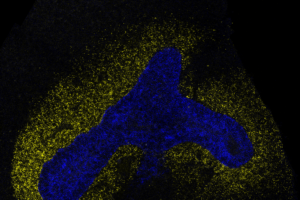
AI model decodes the language cells use to communicate
A new computational approach reveals how cells communicate to assemble into tissues. This could accelerate stem cell engineering, improve disease models, and inform therapies.

A new computational approach reveals how cells communicate to assemble into tissues. This could accelerate stem cell engineering, improve disease models, and inform therapies.

The FDA clearance permits the motion-preserving device to be implanted across two levels in the cervical spine.
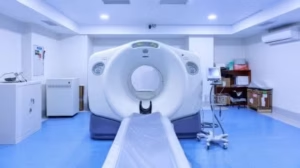
GE HealthCare (Nasdaq: GEHC) has claimed a European approval for a relatively compact, self-shielded cyclotron designed for the local production of the rapidly decaying isotopes used in PET imaging tracers.
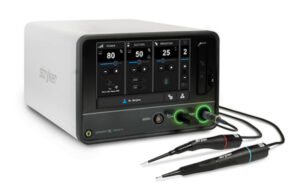
Stryker (NYSE: SYK) earned an FDA 510(k) clearance for its latest ultrasonic bone and soft tissue removal platform, the Sonopet 3.

A new approach can program these cells inside the body and shows promise against diseases caused by dysfunctional T cells, including lymphoma and autoimmune hepatitis.

The European certification follows the conclusion of a pivotal clinical study evaluating 244 patients.

CORUS incorporates integrated screw fixation as a nonsegmental posterior instrumentation tool.
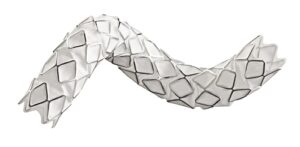
FLAGSTAFF, Ariz., Oct. 14, 2026 /PRNewswire/ — W. L. Gore & Associates’ medical business (Gore) today announced U.S. Food and Drug Administration approval of an expanded indication for the GORE® VIABAHN® VBX Balloon Expandable Endoprosthesis (VBX Stent Graft) for use in fenestrated and branched endovascular aortic repair (FEVAR and BEVAR).

MENLO PARK, Calif., Oct. 14, 2026/PRNewswire/ — Maverix Medical, a company focused on revolutionizing the diagnosis and treatment of lung cancer, has augmented its console-free cryoprobe portfolio. Today the company announced that the U.S. Food and Drug Administration granted 510(k) clearance on September 2, 2026, to the Maverix Narwhal™ Pro Cryo System, the second of two flexible cryoprobes built on the same cartridge-powered architecture.
FORT MYERS, Fla., Oct. 14, 2026 /PRNewswire/ — Florida Cancer Specialists & Research Institute, LLC (FCS) is celebrating its pivotal role in the development of two recently approved targeted therapies that expand treatment options for patients with advanced breast and pancreatic cancers, underscoring the FCS’s longstanding commitment to advancing oncology research and expanding access to clinical trials.