Sonorous Neurovascular earns FDA clearance for next-gen neurovascular catheter
Sonorous Neurovascular announced today that it received FDA 510(k) clearance for its BosCATH next-generation neurovascular catheter.

Sonorous Neurovascular announced today that it received FDA 510(k) clearance for its BosCATH next-generation neurovascular catheter.

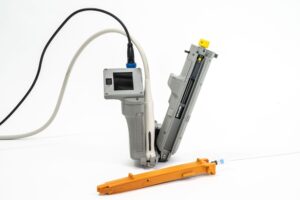
Luminoah announced today that it received FDA clearance for Luminoah Flow, an enteral feeding system for those who rely on tube feeding.

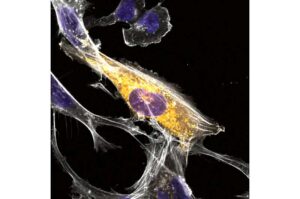
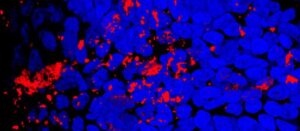
Researchers from DZNE, University Hospital Bonn and the Cluster of Excellence ImmunoSensation at the University of Bonn have captured this infiltration process in the living brain with advanced microscopy.

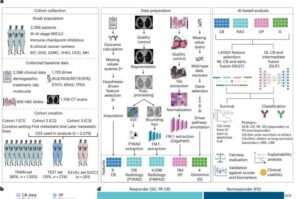
Oregon Health & Science University researchers have developed a first-of-its-kind method to predict cancer patient survival using advanced molecular data from individual cells.

A team of researchers at Kyoto University have demonstrated that the chaotic component of heartbeat variability is uniquely sensitive to cognitive brain activity. Conventional heart rate variability, HRV, indices show no consistent response, whereas chaos-based measures reveal clear and reproducible changes, providing a new noninvasive indicator of brain-heart interaction.

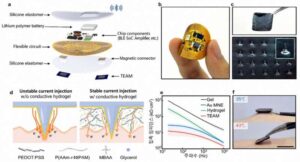
A research group led by Associate Professor Takumi Kobayashi and Professor Daisuke Anzai at the Graduate School of Informatics, Osaka Metropolitan University, focused on optimizing signal transmission separately for each frequency, allowing multiple implants to coordinate their signals using ultra-wideband (UWB) communication.

A research group led by Professor Toru Nakazawa at the Tohoku University Graduate School of Medicine has developed an artificial intelligence (AI) model that estimates “retinal age,” an indicator reflecting an individual’s biological aging, from a single fundus photograph of the retina

A research team led by The Hong Kong University of Science and Technology (HKUST) has developed a pioneering artificial intelligence (AI) pathology analysis system that can accurately recognize multiple types of cancer using only a minimal number of samples.

Researchers led by Henry Daniell of the School of Dental Medicine have shown that extracts from bioengineered chewing gum reduce the levels of three microbes known to be associated with head and neck squamous cell cancer (HNSCC), paving the way for more effective and affordable therapies.

Broader indications reinforce SINEFIX as a versatile alternative to traditional suture anchors for soft tissue-to-bone fixation.