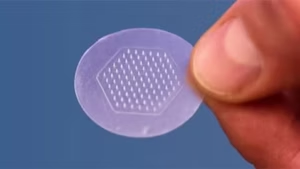
Moving the Needle on Medication Delivery
Drawing on research pioneered at Tufts, Anodyne Nanotech is creating patches that could change the future of medicine

Drawing on research pioneered at Tufts, Anodyne Nanotech is creating patches that could change the future of medicine
The FDA’s decision follows a clinical assessment of the Emboliner, including the PROTECT H2H IDE study.
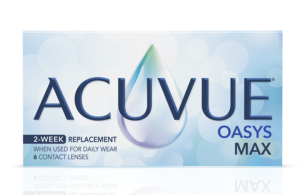
Johnson & Johnson MedTech (NYSE: JNJ) announced today that it has received a CE mark for its Acuvue Oasys Max 2-Week, a new reusable contact lens.
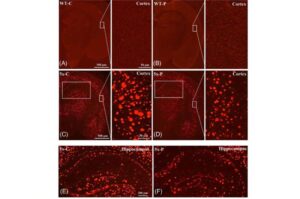
A family of nanoparticles—tiny, biodegradable molecules commonly used to deliver drugs to patients—shows promise in treating Alzheimer’s disease without additional medication, according to new research from a University of Alberta neuroscientist.

CAR T cell therapy, which involves genetically modifying a patient’s own immune cells to fight cancer, is a technique that has shown great promise, especially against blood cancers. But currently, only about 4% of patients with advanced or metastatic cancer in the United States are candidates for CAR T therapy, and closer to 3% will actually benefit, according to one recent analysis.
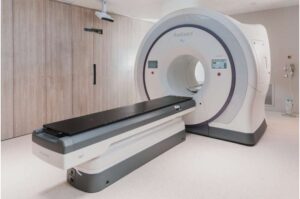
Functional magnetic resonance imaging, or fMRI, gives researchers a powerful way to study brain activity. But the scans can be incredibly noisy for patients and research subjects, with peak sound levels reaching 120 to 138 decibels—about as loud as a jackhammer.

A new wireless device—lighter than a U.S. dime and shaped like a tiny chef’s hat—can track the brain waves of animals as they move in natural habitats, opening doors to understanding complex behaviors that are impossible to study in the lab.

A new report in the New England Journal of Medicine by researchers at Baylor College of Medicine, Texas Children’s Hospital and Seattle Children’s describes a complete regression of hepatoblastoma, the most common pediatric liver cancer, in a 3-year-old treated with a novel immunotherapy.

Latest Clearance Expands VERAFEYE’s Capabilities as the Company Prepares for Commercial Launch in Early 2027
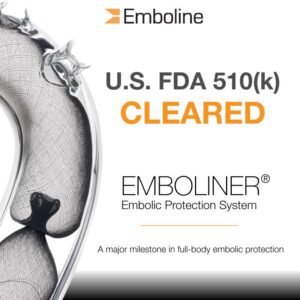
Clearance brings full cerebral and systemic embolic protection to patients undergoing transcatheter aortic valve replacement (TAVR)