Blog

- Andrew Celentano

Gut microbes help set the body’s inflammatory response to vaccination

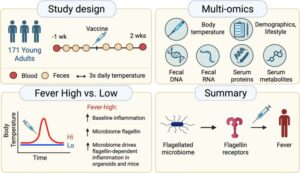
Vaccination is one of the most important tools for preventing infectious diseases and protecting public health. However, immune responses after vaccination vary dramatically from person to person: If you give many people the exact same vaccine, some will experience side effects such as fever and flulike symptoms while others feel fine.


Read More »

Wearable tech gives women ‘proof their pain is real’

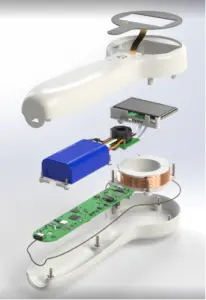
Women struggling to secure answers for suspected endometriosis and PMOS could be given stronger evidence of their symptoms through wearable technology shaped by its founder’s own lived experience. WombWise, founded by Edinburgh Napier University graduate Emily Youngs, has been crowned winner of the Create Change Challenge at the Converge Awards.

Read More »

Viome Launches CancerDetect® Pancreatic, Built For Early Pancreatic Cancer Detection

BELLEVUE, Wash., Oct. 8, 2026 /PRNewswire/ — Viome PRO, the clinical division of Viome Life Sciences, today launched CancerDetect® Pancreatic, a blood test that looks for pancreatic ductal adenocarcinoma by measuring the enzyme activity associated with the disease. In Viome’s blinded validation, the test detected 86 percent of stage I and II cancers with 90 percent specificity, a performance aimed squarely at the early stages where treatment can still change the outcome. The test is ordered by a physician, drawn as a routine venous sample, and processed in Viome’s CLIA-certified laboratory.

Read More »

New genetic insights could help detect hearing loss earlier

A team of hearing specialists at Vanderbilt Health analyzed thousands of data samples in the institution’s BioVU biobank to understand genetic susceptibility of sensorineural hearing loss, which is caused by damage to the inner ear. Their study is published in JAMA Otolaryngology-Head & Neck Surgery.

Read More »

Abdominal fluid reveals rare immune cells that may limit attacks on tumors

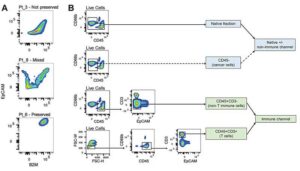
In a study published in Science Immunology, researchers used malignant ascites—fluid that accumulates in the abdomen of some patients when cancer metastasizes to the abdominal cavity—to uncover immune programs associated with metastatic disease, including a rare population of RORC-expressing dendritic cells not previously linked to human cancer.

Read More »