Blog

- Andrew Celentano

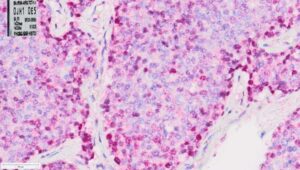
Magnetic pulses reprogram immune cells to fight breast cancer in preclinical models

Researchers from the National University of Singapore (NUS) have demonstrated an innovative approach for targeted breast cancer therapy using pulsed electromagnetic fields (PEMFs). The NUS team successfully reprogrammed tumor-associated macrophages (TAMs), a corrupted class of immune cells that typically promote cancer growth, into an active anti-tumor state that attacks and destroys cancer cells.

Read More »

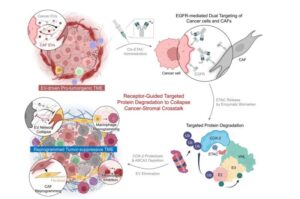
Blocking gene boosts T-cell attacks on chronic hepatitis B virus and tumors

A research team led by Professor Zhou Xuyu from the Institute of Microbiology of the Chinese Academy of Sciences (CAS), in collaboration with researchers from Beijing Ditan Hospital and Capital Medical University, has identified ANKRD11 as a key regulator that reduces the activity of CD8+ T cells during chronic hepatitis B virus (HBV) infection and cancer. The researchers found that ANKRD11 suppresses the AP-1 signaling pathway, which usually helps CD8+ T cells mount effective responses against infections and tumors.

Read More »

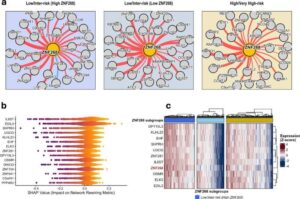
AI tool successfully predicts outcomes of immunotherapy in lung cancer

Artificial intelligence (AI) tools can help physicians predict treatment and survival outcomes in patients with advanced non-small cell lung cancer (NSCLC) treated with immunotherapy, according to a new study published in Nature Medicine. The study reported findings from the I3LUNG project, a large international trial aimed at improving the treatment of metastatic NSCLC by developing AI-based predictive models that can help determine the best therapeutic approach for each individual.

Read More »

Miniaturized bone marrow-on-a-chip tracks human immune cells as they build lasting antibody defenses

A scientific team has developed a laboratory model that reveals how antibody-producing plasma cells migrate, mature and survive within human bone marrow, a main location of long-lived antibody-producing plasma cells. The platform combines a lymph node-mimicking organoid with a tissue chip that mimics bone marrow, allowing scientists to observe key stages of plasma cell development that have been difficult to study in humans.

Read More »