
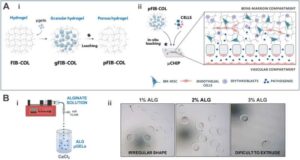
Micropores enhance organ-on-chip models for studying hidden infections
A new study provides a powerful way to study infections in environments that closely mimic human organs.
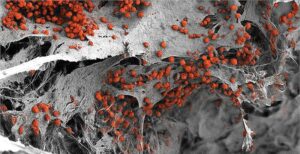
Bone marrow model built entirely from human cells can reduce animal testing
Our body’s “blood factory” consists of specialized tissue made up of bone cells, blood vessels, nerves and other cell types. Now, researchers have succeeded for the first time in recreating this cellular complexity in the laboratory using only human cells. The novel system could reduce the need for animal experiments for many applications.
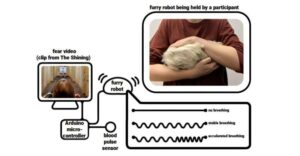
‘Breathing’ robots reveal how fear spreads through touch
Humans can “catch” fear from robots, new research has shown. The findings—by a team of psychologists from the University of Amsterdam and the University of British Columbia—shed new light on how emotions can spread through touch, with implications for human relationships, mental health, and future technologies such as virtual reality and wearable devices.

First fully synthetic brain tissue model engineered by scientists
For the first time, scientists have grown functional, brain-like tissue without using any animal-derived materials or added biological coatings. The development opens the door to more controlled and humane neurological drug testing.

Philips unveils AI-powered heart valve repair solution for TEER procedures
Philips (NYSE: PHG)+ today announced the introduction of DeviceGuide, an AI-powered tracking solution for interventional cardiology.
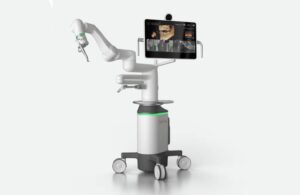
Neocis unveils next-gen AI-powered dental robot
Neocis announced today that it launched Yomi S, its next-generation robotic platform for dental implant surgery.

1nhaler raises $2M for cardboard inhaler device
1nhaler announced today that it secured approximately $2 million (£1.5 million) in seed funding to support its inhaler technology.
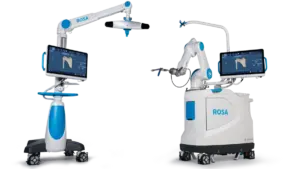
Zimmer wins FDA clearance for updated knee robot
Competing with companies including Stryker and J&J, Zimmer has moved to strengthen its position by developing an updated robot.