
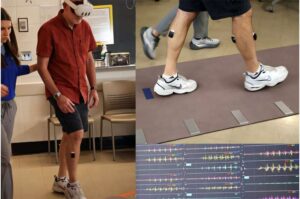
Rethinking Parkinson’s gait rehabilitation through wearable sensing and virtual reality
Imagine stepping into a virtual world while sensors embedded in wearable technology track the way that you move outside in the real world. For an individual with Parkinson’s disease, this opportunity gives researchers a detailed look into how the disease affects movement and offers insight into how it can be more effectively treated.
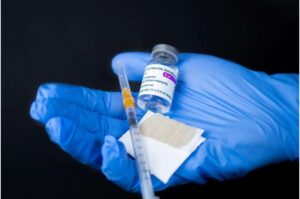
Faster, fairer COVID-19 vaccine rollout could have saved millions of lives, modeling reveals
Beginning the global COVID-19 vaccine rollout 100 days after the virus was sequenced could have saved more than 8 million lives by the end of 2021, most of them in lower-middle-income countries, according to modeling evidence brought together in a new policy brief from the United Nations University Institute for Water, Environment and Health (UNU-INWEH).
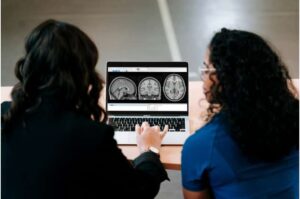
Gentle brain ultrasound may help ease delusions in schizophrenia
Targeting a deep brain region with sound waves may safely reduce delusions in people with schizophrenia and schizoaffective disorder, initial study results show. These conditions can cause people to hear or see things that are not there and develop beliefs that are firmly held but not true.

Phantom Neuro Implants Neural Interface in Humans for the First Time
Phantom X is designed to translate intended arm and hand movements into commands for robotic prosthetic limbs
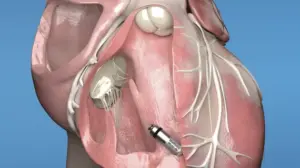
Medtronic nets CE mark for Vitalis family of conduction system pacemakers
Medtronic (NYSE: MDT) has claimed a CE mark for its latest portfolio of pacemakers designed for conduction system pacing, which taps into the heart’s natural electrical pathways.

Repeating stretch of DNA offers a new clue to Alzheimer’s susceptibility
A three-letter sequence repeating along a stretch of DNA could offer new clues about why some people are more susceptible to Alzheimer’s disease than others. The sequence, CCG, sits in a region of DNA that controls the gene FAM193B.

DNA once dismissed as ‘noise’ reveals new bacterial species in prostate cancer patients
University of East Anglia researchers have discovered the genetic blueprints of 18 new bacterial species collected from prostate cancer patients.
Common cold sore virus may reprogram the brain’s immune defenses
Researchers at the University of Colorado Anschutz have discovered how herpes simplex virus type 1 (HSV-1), the virus that causes cold sores, can fundamentally change how the brain’s immune cells respond to infection, revealing a potentially important connection between viral infection, chronic inflammation and Alzheimer’s disease.