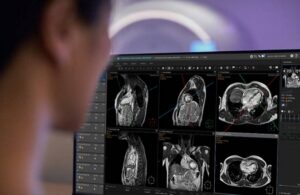
Aidoc Secures FDA Clearance for Healthcare’s First Comprehensive Foundation Model AI
11 newly cleared indications, combined with three existing ones, introduce an AI safety net for crowded Emergency Departments and imaging backlogs

11 newly cleared indications, combined with three existing ones, introduce an AI safety net for crowded Emergency Departments and imaging backlogs

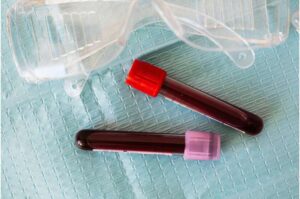
DiaCardia, a novel artificial intelligence model that can accurately identify individuals with prediabetes using either 12-lead or single-lead electrocardiogram (ECG) data, has been developed. This breakthrough holds promise for future home-based prediabetes screening using consumer wearable devices, without requiring invasive blood tests.

New research from the University of St Andrews, the University of Copenhagen and Drexel University has developed AI computational models that predict the degeneration of neural networks in amyotrophic lateral sclerosis (ALS).

A team of Mass General Brigham researchers has developed one of the first fully autonomous artificial intelligence (AI) systems capable of screening for cognitive impairment using routine clinical documentation.

Elekta announced today that its Evo CT linear accelerator (linac) received FDA 510(k) clearance, making it available to U.S. radiation oncology professionals.

SEATTLE, Jan. 15, 2026 /PRNewswire/ — Proprio, the surgical technology company pioneering real-time, AI-powered intraoperative guidance and data-driven surgical workflows, today announced the U.S. Food and Drug Administration (FDA) has granted clearance for the “Picasso” feature. This marks the company’s fourth FDA-cleared capability within its Paradigm platform.

AliveCor announced today that it received FDA clearance for the next generation of its AI technology for the Kardia 12L ECG system.

A “unique” AI-powered headset that can predict epileptic seizures minutes before they occur has been developed by scientists in Scotland.

SAN JUAN, Puerto Rico, Jan. 7, 2026 /PRNewswire/ — CorePlus announced the implementation of AIxURO, a state-of-the-art software solution that utilizes artificial intelligence to significantly improve the accuracy and efficiency of bladder cancer detection. This innovative platform enhances traditional urine cytology analysis, providing faster, more precise diagnostics.

Nanoparticles coated with molecular sensors could be used to develop at-home tests for many types of cancer.