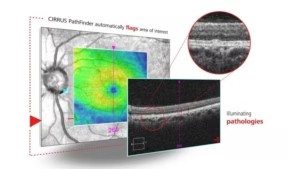
Zeiss’ AI-driven tool gets CE mark for OCT scans
The CIRRUS PathFinder tool is available via licensing in the new software update.

The CIRRUS PathFinder tool is available via licensing in the new software update.
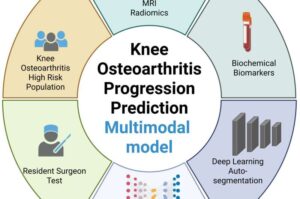
An artificial intelligence (AI)-assisted model that combines a patient’s MRI, biochemical, and clinical information shows preliminary promise in improving predictions of whether their knee osteoarthritis may soon worsen. Ting Wang of Chongqing Medical University, China, and colleagues have published this model in the journal PLOS Medicine.
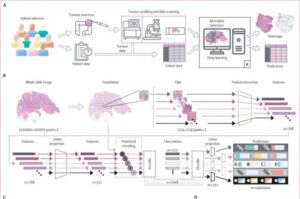
A multicenter study has analyzed nearly 2,000 digitized tissue slides from colon cancer patients across seven independent cohorts in Europe and the US. The samples included both whole-slide images of tissue samples and clinical, demographic, and lifestyle data.
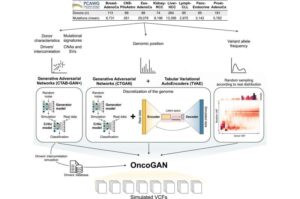
A new AI system that creates simulated cancer genomes could reshape the tools used to analyze tumors, helping bring about more accurate cancer diagnosis and ultimately more effective treatments.

Researchers have developed an AI tool that can help doctors predict who might develop a potentially fatal heart condition, just from an ECG.
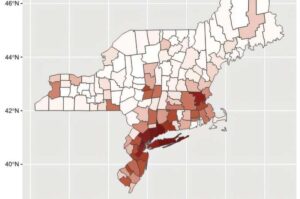
West Nile virus (WNV) has been the dominant cause of mosquito-borne illness in the United States since its introduction into North America in 1999. There are no vaccines nor medications to prevent or treat illness in people, so surveillance, prevention, and control remain the best options to protect the public.
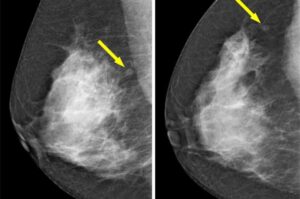
A hybrid reading strategy for screening mammography, developed by Dutch researchers and deployed retrospectively to more than 40,000 exams, reduced radiologist workload by 38% without changing recall or cancer detection rates.

RESEARCH TRIANGLE PARK, N.C., Aug. 19, 2025 /PRNewswire/ — Calidar, Inc., an innovative start-up in precision diagnostic imaging, today announced the successful imaging of the first patient with its 4D Mammography system.

ANKARA, Türkiye, Aug. 18, 2025 /PRNewswire/ — Nerveblox, an AI software solution by SmartAlpha, designed to assist physicians in using ultrasound while administering regional anesthesia procedures commonly known as ‘nerve blocks’, has received U.S. Food and Drug Administration (FDA) 510(k) clearance.
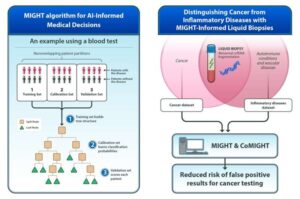
Two studies led by Johns Hopkins Kimmel Cancer Center, Ludwig Center, and Johns Hopkins Whiting School of Engineering researchers report on a powerful new method that significantly improves the reliability and accuracy of artificial intelligence (AI) for many applications.