
Overlooked Foodborne Parasites Caused an Estimated 171 Million Illnesses Worldwide in a Single Year
Parasites that contaminate food pose a major threat around the world, disproportionately affecting low- and middle-income countries.

Parasites that contaminate food pose a major threat around the world, disproportionately affecting low- and middle-income countries.
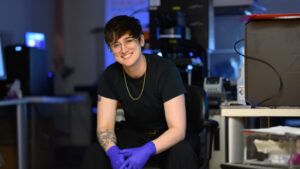
Shannon Knight, a brain and cognitive sciences PhD candidate and McGovern Institute researcher, focuses on developing a novel gene therapy.

The device utilises non-invasive ultrasound technology to track blood flow through the access point used by dialysis patients.

ANS-858 is being developed to reduce pathological craving associated with alcohol and other substance use disorders.
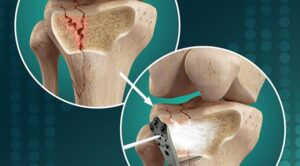
Animal trials show cartilage repair within four weeks following a single injection of chondrocyte spheroids
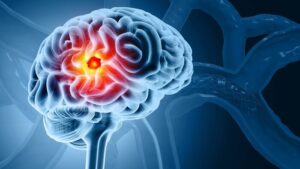
PROVIDENCE, R.I., Aug. 18, 2026 /PRNewswire/ — GT Medical Technologies, Inc., a medical device company dedicated to improving the lives of patients with brain tumors, announced today that new data from a multi-institutional feasibility clinical trial across 15 institutions nationwide presented by Clark Chen, M.D., Ph.D., professor and director of the Brain Tumor Program at Brown University Health, suggest that a novel radiation therapy device may help improve outcomes for patients newly diagnosed with glioblastoma, one of the deadliest forms of brain cancer.

Expanded indication enables clinicians to detect sarcopenia risk from the same rapid SOZO scan, supporting earlier intervention in cancer care.
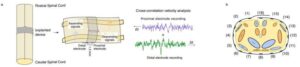
Researchers from Houston Methodist and the University of Cambridge have developed a flexible device that wraps around the spinal cord and can simultaneously interpret multiple signals related to movement, sensation and internal body functions. The research demonstrates that a single device may be capable of restoring lost functions after spinal cord injury.
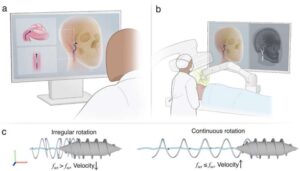
Researchers from the UT and Radboudumc have steered a tiny screw-shaped robot through real brain tissue, controlled only by a magnet outside the body. The test used sheep brain tissue in the lab. The team built a model that predicts exactly when such a robot loses control, a step towards treating stroke and tumors deep in the brain without open surgery. The study is published in the journal Advanced Science.
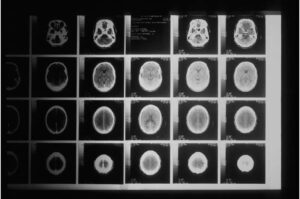
For patients facing a diagnosis of glioblastoma—one of the most aggressive and devastating forms of brain cancer—the standard path forward has long meant invasive open-skull surgery and a daunting prognosis.