
Ceribell gets FDA nod for delirium monitoring
Ceribell (Nasdaq:CBLL) announced that it received FDA 510(k) clearance for its proprietary delirium monitoring solution.

Ceribell (Nasdaq:CBLL) announced that it received FDA 510(k) clearance for its proprietary delirium monitoring solution.

HeartBeam (Nasdaq:BEAT) announced today that it received FDA 510(k) clearance for its 12-lead electrocardiogram (ECG) synthesis software.

HeartBeam’s ECG software duplicates the 12-lead ECG approach undertaken in healthcare settings with electrodes to evaluate heart arrhythmias.

The assay is currently available in nations that recognise the CE Mark.

The ProVee System is a next-generation prostatic urethral stent designed to gently open up the obstructed prostate and relieve lower urinary tract symptoms associated with BPH

The Wearable Imaging for Transforming Elderly Care (WITEC) collaborative research project aims to develop the world’s first wearable ultrasound imaging system for continuous, real-time monitoring and personalised diagnosis of chronic conditions such as hypertension and heart failure.
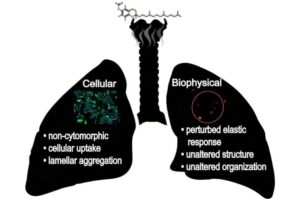
Researchers from the University of Windsor are using neutrons at the Department of Energy’s Oak Ridge National Laboratory to better understand symptoms associated with e-cigarette/vaping-associated lung injury (EVALI).
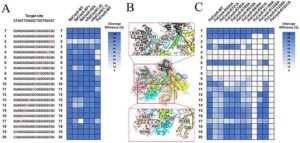
Liquid biopsy is increasingly recognized as a promising tool for cancer detection and treatment monitoring, yet its effectiveness is often limited by the extremely low levels of tumor-derived DNA circulating in the blood.

University of South Australia scientists have developed a powerful new way to uncover the genetic interactions that fuel cancer progression, paving the way for earlier and more precise treatments.
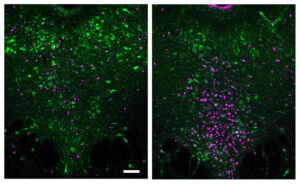
MIT researchers discover how an immune system molecule triggers neurons to shut down social behavior in mice modeling infection.