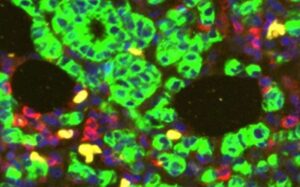
New antivirals are being tested for herpesviruses, and scientists now know how they work
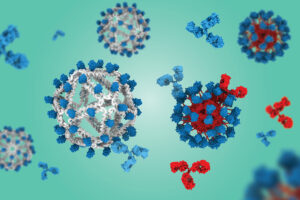
Harvard Medical School researchers have uncovered crucial insights into how an emerging class of antiviral drugs works.

Harvard Medical School researchers have uncovered crucial insights into how an emerging class of antiviral drugs works.

Cclcium alpha-ketoglutarate (CaAKG), a safe, naturally occurring metabolite commonly studied for healthy aging, can restore key memory-related brain functions that have been disrupted in Alzheimer’s disease.

A joint research team led by Professor Steve Park from the Department of Materials Science and Engineering and Professor Sangyong Jon from the Department of Biological Sciences has developed a powder-type hemostatic agent that forms a powerful hydrogel barrier.

What if we could watch blood move through an entire organ in real time?

One of the most challenging moments in cancer treatment comes when a therapy stops working. In many metastatic cancers, drugs that are initially effective lose their potency over time, as malignant cells acquire mutations that enable them to survive and spread.

Now, a research team from University Hospitals, Case Western Reserve University, and the Louis Stokes Cleveland VA Medical Center has challenged this long-held dogma in the field. They tested whether brains already badly afflicted with advanced AD could recover.

A new method could enable users to design portable medical devices, like a splint, that can be rapidly converted from flat panels to a 3D object without any tools.

A multicenter study led by UC Davis Health has tested a new treatment designed to improve care for people with a rare liver disease called primary sclerosing cholangitis. Researchers learned that an anti-inflammatory and anti-fibrotic monoclonal antibody known as nebokitug was safe and showed potential efficacy in patients with PSC.

A new study in the lab of Jason Stein, Ph.D., modeled brain development in a dish to identify cells and genes that influence infant brain growth, a trait associated with autism.

Scientists at Duke-NUS Medical School have developed two powerful computational tools that could transform how researchers study the “conversations” between cells inside the body. The tools, called sCCIgen and QuadST, help scientists understand both where cells are located in tissues and how they communicate through genetic activity and chemical signals.