Blog

- NOVEL DISCOVERIES

Dry powder inhalers can improve patient outcomes and lower environmental impact

New research from UCLA Health suggests that certain inhalers used to treat chronic obstructive pulmonary disease (COPD) are not only less harmful to the environment but can also lead to slightly better patient outcomes. Inhalers are essential therapies for COPD and other lung conditions, but many commonly used devices rely on propellants that are potent greenhouse gases.

Read More »

Smarter tissue and organ repair thanks to next-gen hydrogel

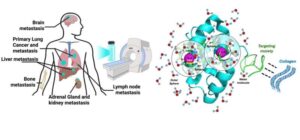
A multidisciplinary team have built hydrogels built entirely from synthetic peptides so their properties can be precisely tailored through chemical design. By harnessing the power of collagen-inspired peptides and light-triggered chemistry, a University of Ottawa research team has engineered a customizable material with the potential to be a gamechanger for soft tissue repair, whether it’s closing a surgical incision or sealing a traumatic wound.

Read More »

MRI antenna can boost image quality and shorten scan times—without changing existing machines

Magnetic resonance imaging (MRI) is one of medicine’s most powerful diagnostic tools. But certain tissues deep inside the body—including brain regions and delicate structures of the eye and orbit that are of particular relevance for ophthalmology—are difficult to image clearly. The problem is not the scanner itself, but the hardware that sends and receives radio signals.

Read More »

Scientists develop first-of-its-kind antibody to block Epstein Barr virus

Fred Hutch Cancer Center scientists reached a crucial milestone in blocking Epstein Barr virus (EBV), a pathogen estimated to infect 95% of the global population that is linked to multiple types of cancer, neurodegenerative diseases and other chronic health conditions. Using mice with human antibody genes, the research team developed new genetically human monoclonal antibodies that prevent two key antigens on the surface of the virus from binding to and entering human immune cells.

Read More »