Blog

- NOVEL DISCOVERIES

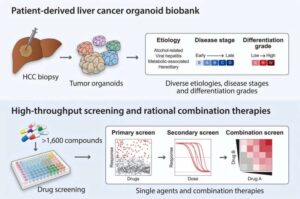
Machine-learned biomarker identifies those at high risk for liver cancer

Researchers led by Xian-Yang Qin at the RIKEN Center for Integrative Medical Sciences (IMS) in Japan have developed a score that predicts the risk of liver cancer. Published in the journal Proceedings of the National Academy of Sciences, the study establishes that the protein MYCN drives liver tumorigenesis, specifically of the type of tumors found in the deadliest subtype of liver cancer.

Read More »

Stopping fatal blood loss with clay

Traumatic injury is the third leading cause of death in the state of Texas, surpassing strokes, Alzheimer’s disease and diabetes, according to the Centers for Disease Control and Prevention. A massive number of these deaths are the result of uncontrolled bleeding. “Severe blood loss can rapidly lead to hemorrhagic shock,” said Dr. Akhilesh Gaharwar, a biomedical engineering professor at Texas A&M University. “Many patients die within one to two hours of injury. This critical period is often referred to as the ‘golden hour.'”

Read More »

Kirigami-inspired sensors precisely map activity of neurons in the primate brain

Recent technological advances have opened new exciting possibilities for the development of smart prosthetics, such as artificial limbs, joints or organs that can replace injured, damaged or amputated body parts. These same advances are also enabling the development of other systems that connect the brain with machines, to record the activity of neurons or allow humans to operate machines in entirely new ways.

Read More »

AI-powered liquid biopsy can classify pediatric brain tumors with 92% accuracy

St. Jude Children’s Research Hospital scientists, in collaboration with scientists at the Hopp Children’s Cancer Center Heidelberg (KiTZ), German Cancer Research Center (DKFZ) and other international centers, created Methylation-based Predictive Algorithm for CNS Tumors (M-PACT). M-PACT uses AI to sift through ctDNA in cerebrospinal fluid and molecularly classify tumors based on their DNA methylation pattern.

Read More »

Studies show 11 genetic variants affect gut microbiome

In two new studies on 28,000 individuals, researchers are able to show that genetic variants in 11 regions of the human genome have a clear influence on which bacteria are in the gut and what they do there. Only two genetic regions were previously known. Some of the new genetic variants can be linked to an increased risk of gluten intolerance, hemorrhoids and cardiovascular diseases.

Read More »