
Study linking microgravity and space radiation to accelerated aging could yield therapies on Earth
What happens to the human body in space may help scientists create new anti-aging therapies.

What happens to the human body in space may help scientists create new anti-aging therapies.

Parkinson’s disease (PD) is the second most common form of neurodegenerative disease and afflicts more than 10 million people worldwide.
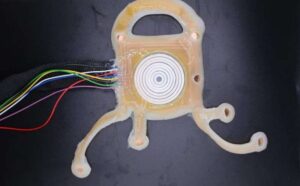
A University of Texas at Austin-led team of researchers has developed a noninvasive patch that boosts REM sleep in real-world trials without surgery or medication.
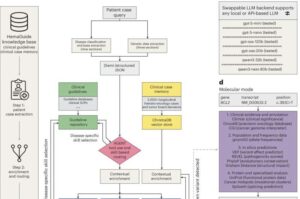
Researchers from the German Cancer Research Center (DKFZ), the HI-STEM* Stem Cell Institute and Heidelberg University Hospital (UKHD) have developed “HemaGuide,” an AI assistant that supports physicians in making difficult treatment decisions.
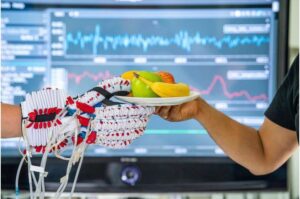
The Technical University of Munich (TUM) has developed a soft, pneumatic glove that restores the ability of people with paralyzed hands to grasp object
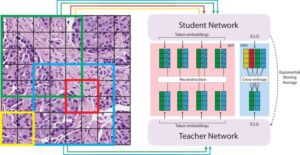
In recent years, notable advances have been made in diagnosing and treating breast cancer. However, its recurrence continues to plague thousands, deepening the need to find ways to better predict the likelihood of its return.
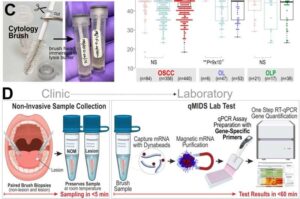
A paper published in the journal Biomarker Research by a cross-university team led by Queen Mary University of London researchers validates the use of a noninvasive brush biopsy test that can detect oral cancer within one hour.
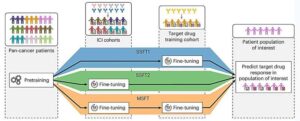
A new artificial intelligence model called COMPASS, developed by Harvard Medical School researchers and their colleagues, improves prediction of which patients are most likely to respond to ICIs.
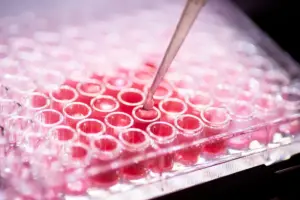
In a preprint published in bioRxiv, the team describes SpudCell. The system could grow, copy its DNA, divide, and take in fresh materials from smaller bubble-like structures nearby. When the team gave one version a genetic change that helped it feed more efficiently, those cells grew faster and became more common over five generations.
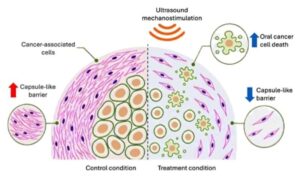
In a new study, researchers at the Indian Institute of Science (IISc), in collaboration with clinicians at MS Ramaiah Medical College and Hospitals, explored whether low-frequency ultrasound mechanical stimulation could selectively kill oral cancer cells.