MedTech News:

October 15, 2026

Drug-coated balloons could offer an alternative to permanent heart stents for some patients

Thousands of heart patients could be treated without having a metal stent permanently implanted in their arteries—according to research from the University of East Anglia (UEA). A major analysis of more than 7,800 patients found that a newer treatment using drug-coated balloons performed just as well as conventional stents at preventing heart attacks and cardiovascular deaths.

Read More »

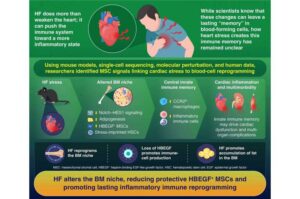
How heart failure reshapes bone marrow to create inflammation-related immune memory

Heart failure (HF) is a condition in which the heart is not able to pump blood effectively. However, its effects go beyond pumping and circulation. HF is also known to cause a lasting form of innate immune memory in stem cells that synthesize blood and progenitor cells that are present in the bone marrow (BM). This can result in the production of immune cells that promote inflammation and worsen heart function. However, the exact mechanism of this process remained unclear.

Read More »

Lab-grown tumors reveal immune cells capable of killing small cell lung cancer

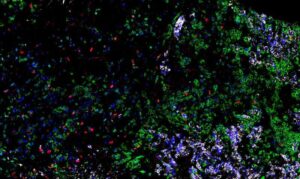
Researchers have uncovered a previously overlooked immune cell that can recognize and kill small cell lung cancer, the most aggressive form of the disease globally. Published in Cancer Cell, the WEHI study found patients with higher levels of these cells lived longer, uncovering a hidden immune defense that could be exploited to attack these hard-to-treat tumors.

Read More »

Moldable gel controls bleeding and supports bone repair in preclinical tests

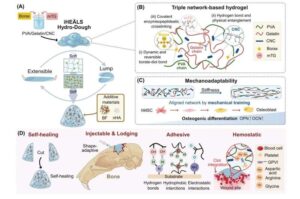
A research team from the Faculty of Dentistry at The University of Hong Kong (HKU), working in collaboration with Su Ryon Shin’s group at Brigham and Women’s Hospital, Harvard Medical School, has advanced and preclinically validated a shape-adaptive hydrogel designed for challenging clinical trauma scenarios involving severe bleeding, irregular bone defects and comminuted fractures.

Read More »

Skin has a sex: Females and males do not renew their skin in the same way

By filming skin stem cells in living mice over five months, researchers at the Université libre de Bruxelles (ULB), in collaboration with the University of Cambridge, have discovered that in females these cells renew the skin in a more coordinated way than in males. This difference, controlled by sex hormones, goes hand in hand with faster wound healing in female mice. This research could eventually pave the way for personalized treatments taking into account patients’ sex.

Read More »

Light-activated opioid painkiller may work without dangerous side effects

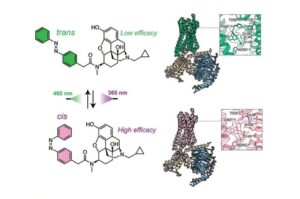
Opioid painkillers are some of the strongest analgesic medicines, but they are also the riskiest owing to a range of side effects, including addiction. An experimental opioid painkiller designed to be reversibly switched on and off with different light frequencies, keeping its action local and out of the brain, may eliminate the dangerous side effects of current opioids, according to a study led by Weill Cornell Medicine and University of Pennsylvania investigators. The findings herald a broad new approach for targeting medicines more precisely and effectively.

Read More »