Wave Neuroscience wins FDA clearance for precision PTSD therapy
Wave’s MeRT platform records individual patient brain data to tailor transcranial magnetic stimulation (TMS) therapy for PTSD treatment.

Wave’s MeRT platform records individual patient brain data to tailor transcranial magnetic stimulation (TMS) therapy for PTSD treatment.

The clearance supports decentralized urine sample collection for molecular STI testing using Roche’s cobas platforms.

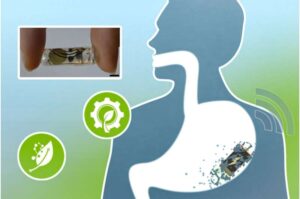
To utilize flexible bioelectronic systems for wound healing, researchers designed the MSWZ. The MSWZ is made up of a mechanical metamaterial in a lattice structure that shrinks and responds like human skin, a reliable conductive layer, and a breathable, flexible encapsulation material.

For patients suffering from traumatic injuries that leave behind “volumetric” gaps—where significant bone and blood vessels are lost—the clock is always ticking. Without a nearby blood supply, cells in the center of a large injury cannot survive, often leading to permanent tissue loss or failed grafts.

Glucosamine use is associated with a 25% higher odds that a person will progress from mild cognitive impairment to dementia and Alzheimer’s disease, researchers report in the journal Nature Metabolism.

Biohub and UC Berkeley show that the laser phase plate, a revolutionary device with a laser 100 million times brighter than the Sun, dramatically improves images obtained through cryo-electron microscopy, giving scientists a new window into the molecular underpinnings of disease

Siemens Healthineers announced that its first China-made dual-source photon-counting CT (PCCT), the NAEOTOM Alpha.Pro, has received market approval from China’s National Medical Products Administration (NMPA).

ANNE One captures ECG, heart rate, respiratory rate, SpO₂, pulse rate, skin temperature, body position, activity, and falls.

Penumbra (NYSE:PEN) announced today that it received FDA clearance for its Thunderbolt thrombectomy platform for stroke.

People with mild cognitive impairment (MCI) are at higher risk of developing dementia. Indeed, many of them experience a gradual decline in cognitive performance over time. Smartphone- or tablet-based memory tests can capture this subtle decline more quickly than conventional testing. These findings come from a study by DZNE in collaboration with university hospitals in Germany, the University of Wisconsin–Madison in the United States, and the startup neotiv.