
FDA selects Dexcom for new digital health device pilot
The FDA announced today that it selected Dexcom (Nasdaq:DXCM) as the first manufacturer for a new digital health pilot.

The FDA announced today that it selected Dexcom (Nasdaq:DXCM) as the first manufacturer for a new digital health pilot.
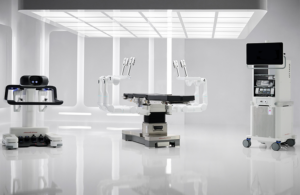
Johnson & Johnson (NYSE:JNJ) announced today that it received FDA de novo authorization for its Ottava surgical robot system.
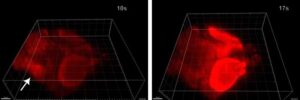
Seizures can race through the brain in seconds, making them difficult to capture in detail. To overcome this challenge, researchers have developed a new high-resolution light-sheet imaging system that is fast enough to image seizure propagation in the brain of a larval zebrafish in 3D.
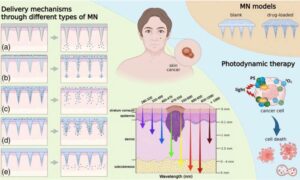
Photodynamic therapy (PDT) uses a light-sensitive drug and a specific wavelength of light to destroy cancer cells. The treatment has become an important option for certain skin cancers because it can target diseased tissue while limiting damage to surrounding skin. But PDT has a fundamental challenge: both the drug and the light must reach the same area of tissue.

Two Northwestern experts explain how to reduce risk without sacrificing a healthy diet

Philips (NYSE:PHG) today announced that it received FDA 510(k) clearance for its next-generation reusable SpO₂ clip sensor.

Casana announced today that it launched the Smart Seat, a smart toilet seat capable of measuring a range of metrics.
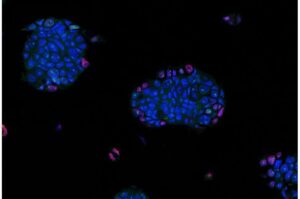
Significant advances have been made in the development of patient-derived tumor “organoids” for preclinical research in two new studies led by Weill Cornell Medicine investigators. Organoids are three-dimensional clumps of cells that mimic structural and functional features of an organ, tumor or other tissue. The advances represent progress in precision medicine and point to the more routine use of tumor organoids as models for evaluating and optimizing cancer treatments.

BURLINGTON, Mass., July 20, 2026 /PRNewswire/ — Consano Bio, Inc., a clinical-stage biotechnology company advancing novel therapeutics designed to address serious, painful orthopedic conditions, today announced that the U.S. Food and Drug Administration (FDA) has cleared the Company’s Investigational New Drug (IND) application for C-1101, its lead investigational therapy for chronic painful lumbosacral radiculopathy (LSR), commonly known as chronic sciatica.
SEOUL, South Korea, July 21, 2026 /PRNewswire/ — Seegene, Inc. (“Seegene”), a global leader in molecular diagnostics, announced today that its U.S. subsidiary, Seegene USA, Inc. (“Seegene USA”), has received an Emergency Use Authorization (EUA) from the U.S. Food and Drug Administration (FDA) for the Allplex™ HSV-1&2/VZV/MPXV Assay, a multiplex real-time PCR assay designed to simultaneously detect multiple viral pathogens associated with clinically overlapping lesion presentations.