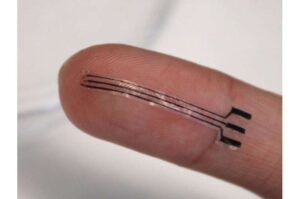
Stretchy implants could stick to arteries to treat high blood pressure
According to researchers at Penn State, tiny devices that gently shock one of the body’s most critical arteries could offer effective treatment.

According to researchers at Penn State, tiny devices that gently shock one of the body’s most critical arteries could offer effective treatment.
Ideating on Glooko’s existing EndoTool system, the cloud-based version is designed to support more scalable deployment across hospital settings.
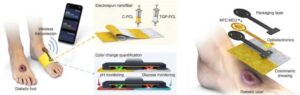
A research team has developed a wireless, battery-free optoelectronic multi-modal sensor patch for diabetic ulcer management. It can monitor wound conditions in real time.
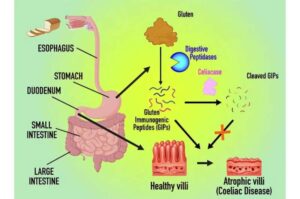
A research project led by the Institute for Research in Nutrition and Food Safety (INSA) and the Faculty of Pharmacy and Food Sciences at the University of Barcelona, together with the Molecular Biology Institute of Barcelona (IBMB) of the CSIC (which stands for Consejo Superior de Investigaciones Científicas), has successfully designed and tested a gluten-degrading molecule that is a promising ally in the management of celiac disease, an autoimmune

Scientists at Houston Methodist have developed an artificial intelligence platform that can decode how cells communicate inside the human body, opening a window into conditions such as Alzheimer’s disease, cancer, and potentially accelerating the search for new treatments.
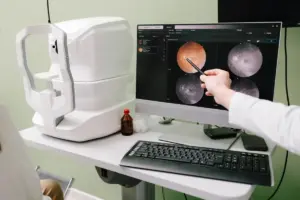
A routine eye scan might reveal more than whether or not someone needs glasses. It could also help doctors spot signs of osteoporosis years before a broken bone ever happens.

Mice treated with special contact lenses experienced antidepressant-like effects comparable to Prozac after only three weeks.

The assay enables ChLIA measurement of testosterone markers, delivering diagnostic capabilities for suspected male hypogonadism.
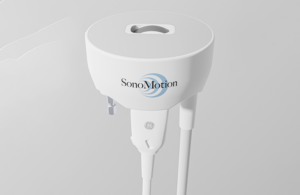
SonoMotion announced today that the company picked up updated FDA clearance for its Break Wave lithotripsy platform.
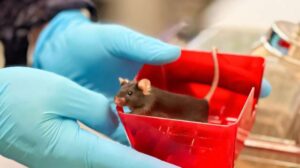
In a world first, a research team at the University of Zurich has successfully treated mice carrying an inherited form of epilepsy.