
AI helps accelerate breast cancer diagnosis for high-risk women
Researchers used an open-source AI model called Mirai, which was developed by the study’s senior author, UC Berkeley data scientist Adam Yala, Ph.D.

Researchers used an open-source AI model called Mirai, which was developed by the study’s senior author, UC Berkeley data scientist Adam Yala, Ph.D.
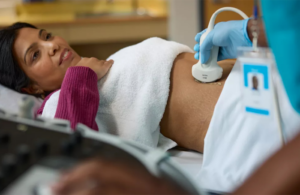
Philips (NYSE:PHG) announced today that it received FDA clearance for its Elevate Plus advanced imaging and AI and automation capabilities.
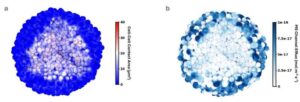
Researchers have solved a long-standing mystery about why physical forces slow cancer growth—and the answer could reshape how the disease is treated. A multidisciplinary team from University of Galway, CÚRAM, the Taighde Éireann-Research Ireland Centre for Medical Devices, and KU Leuven in Belgium built an innovative AI accelerated computational model to test the theory.
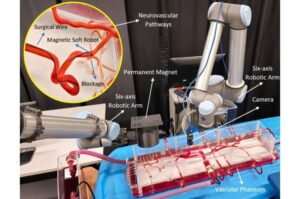
Researchers at Concordia have developed an AI-assisted technique and a robotic platform that may one day help surgeons perform safer, faster and less invasive procedures to treat conditions such as blood clots located deep inside a patient’s neurovascular pathways.

Researchers at Washington University School of Medicine in St. Louis have developed an AI-based classifier that distinguishes between four common brain diseases that cause dementia: Alzheimer’s disease, Parkinson’s disease, frontotemporal dementia and dementia with Lewy bodies, as well as healthy brain aging.
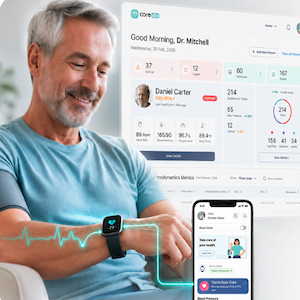
Coredio’s AI software is used to monitor HF parameters via wearables and standard blood pressure cuffs.
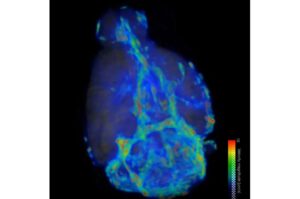
Kelley and his colleagues from the University of Rochester, Brown University, and the University of Copenhagen turned to artificial intelligence for help.
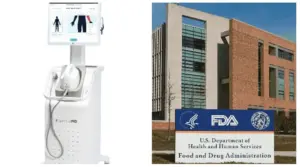
Spectral AI announced that the U.S. Food and Drug Administration (FDA) has granted De Novo classification for its DeepView System, authorizing the company to commence commercial distribution activities in the United States.
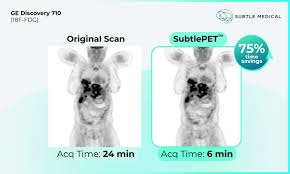
California-based Subtle Medical has announced FDA clearance for SubtleHD(PET), its next-generation PET image enhancement solution designed to improve image quality and accelerate PET imaging workflows across PET/CT and PET/MR systems.

Chicago, Illinois-based Cardiosense announced that the US Food and Drug Administration (FDA) has granted De Novo classification for its PCWP Analysis Software, which is designed to estimate noninvasively pulmonary capillary wedge pressure (PCWP), a key indicator of heart health.