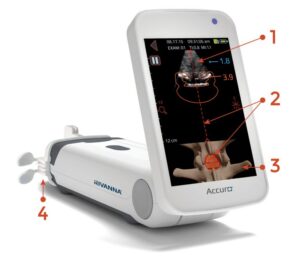
FDA greenlights Rivanna’s AI musculoskeletal imaging system
With FDA clearance in hand, Rivanna highlighted that it will accelerate the development of further AI capabilities for the Accuro XV system.

With FDA clearance in hand, Rivanna highlighted that it will accelerate the development of further AI capabilities for the Accuro XV system.
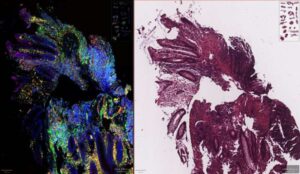
QIMR Berghofer scientists have developed an AI screening tool that harnesses the power of cutting-edge spatial biology analysis to give pathologists “super vision” to detect hidden genetic markers of cancer in standard patient tissue samples.
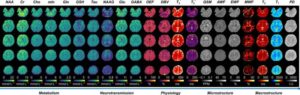
New multiplexed imaging technology using standard clinical MRI systems can simultaneously map more than 20 biomarkers in high resolution, providing a comprehensive view of the brain with a single scan.
A new study led by researchers from VIB and KU Leuven shows that Parkinson’s disease can be divided into distinct subtypes, helping explain why a single treatment does not work for all patients. Using a machine-learning-driven analysis, the team identified two main groups and five subgroups of the disease, marking an important step toward more personalized therapies. The findings are published in Nature Communications.

Founded by Jake Donoghue PhD ’19 and former MIT researcher Jarrett Revels, the company is creating an AI-driven platform to help diagnose and treat disease.
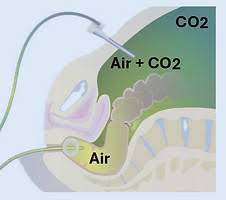
STRASBOURG, France and KITCHENER, ON, May 1, 2026 /PRNewswire/ — Qaelon Medical announced a strategic collaboration with leading surgical recovery company FluidAI Medical, to develop a continuous surgical data ecosystem.
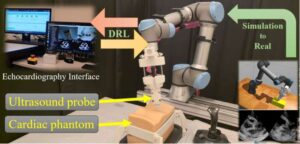
A Concordia-led team of researchers has developed a new AI-driven robotic system that can perform cardiac ultrasound scans autonomously. The researchers say this approach could expand access to cardiac imaging in remote or underserved areas, reduce operator fatigue, and standardize scan quality. The work is published in the journal IEEE Transactions on Medical Robotics and Bionics.
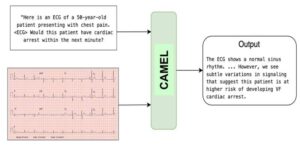
Researchers developed the Cardiac Autoregressive Model for ECG Language-Modeling (CAMEL), an artificial intelligence model that treats ECG less like isolated snapshots and more like language.
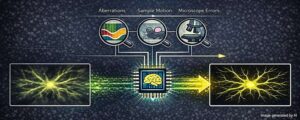
Professor Iksung Kang (School of Electrical Engineering), in collaboration with Professor Na Ji’s research team at UC Berkeley, has developed a technology that accurately corrects image aberrations in microscopes used for live biological imaging.
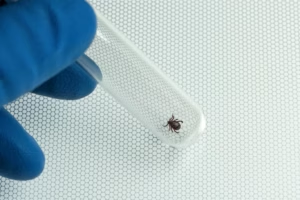
An anonymous gift helped Tufts researchers speed up a project to develop new drugs that could prevent and treat Lyme disease