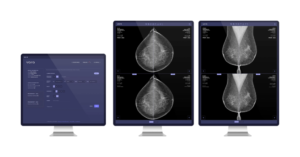
Vara earns CE mark for AI breast imaging
Vara has announced that it has received a new CE certificate for its new breast-imaging AI.

Vara has announced that it has received a new CE certificate for its new breast-imaging AI.
Three presentations at ESMO 2025 will demonstrate Lunit SCOPE IO’s value in predicting immunotherapy response in colorectal, kidney, and lung cancer patients.

Health data helped identify kids in the ER who are likely to develop sepsis within 48 hours

CLEVELAND, Oct. 10, 2025 /PRNewswire/ — Surgical Theater, the leader in surgical XR visualization, today announced U.S. Food and Drug Administration (FDA) 510(k) clearance for SyncAR® Spine, the next-generation release of its spine platform. This clearance expands the system’s capabilities with advanced XR tools powered by AI algorithms. This brings patient MRI and CT directly into the operating room, aligning preoperative plans with intraoperative execution for greater clarity and control in spine surgery.

An Abbott (NYSE: ABT)+
official took to social media today to share that the company added Laralab to its portfolio of digital offerings.
SAN FRANCISCO, Oct. 8, 2025 /PRNewswire/ — Bunkerhill Health today announced that it has received U.S. Food and Drug Administration (FDA) clearance for Bunkerhill MAC, the first artificial intelligence algorithm to detect and quantify mitral annular calcification (MAC). The algorithm runs on routine, non-gated chest CT scans.
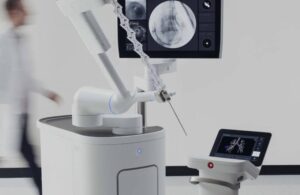
ntuitive Surgical (Nasdaq: ISRG)+
announced today that it received FDA clearance for new software advancements for its Ion endoluminal robot.
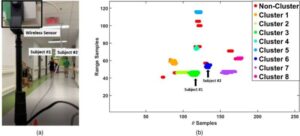
Engineering and health researchers at the University of Waterloo have developed a radar and artificial intelligence (AI) system that can monitor multiple people walking in busy hospitals and long-term care facilities to identify possible health issues.
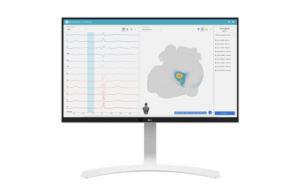
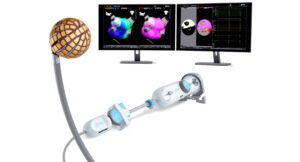
Vektor Medical today announced it received CE mark approval for its vMap artificial intelligence-powered arrhythmia mapping system.

Researchers at McMaster University and the Massachusetts Institute of Technology (MIT) have made two scientific breakthroughs at once: they not only discovered a brand-new antibiotic that targets inflammatory bowel diseases (IBD), but also successfully used a new type of AI to predict exactly how the drug works. To their knowledge, this is a global first for the AI.