
CergenX achieves CE Mark for pioneering AI technology designed to transform newborn brain assessment
Irish medtech company reaches major regulatory milestone for AI-powered technology providing rapid, objective insights into newborn brain activity

Irish medtech company reaches major regulatory milestone for AI-powered technology providing rapid, objective insights into newborn brain activity

The University of Tokyo and Institute of Science Tokyo’s AI detected diabetes with accuracy >80% from 30-second and five-seconds recordings.
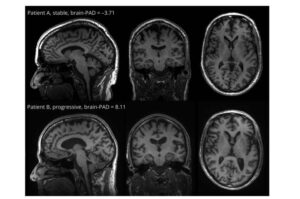
Memory clinics still rely on visual rating scales to assess brain atrophy, yet these tools lack the sensitivity to catch subtle changes associated with early dementia. A measure of how old a person’s brain appears on brain scans compared with their actual age might be a potential predictor of who is more likely to develop dementia over the years, reports a new study published in Neurology.
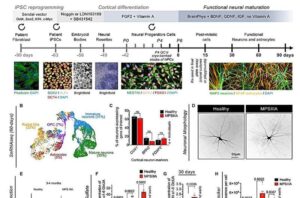
An Australian research collaboration has identified several existing TGA-approved medicines that could help slow brain damage in children with a rare form of dementia—offering hope for faster treatment options.
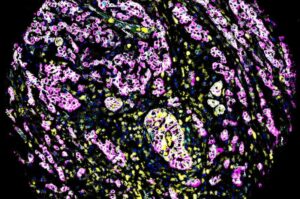
Researchers at the University of Southampton have developed a powerful AI tool that reveals previously invisible patterns inside breast cancers. It uncovers how tiny cellular structures called centrosomes change as tumors grow, spread and evolve. The technology could help clinicians identify high-risk patients, predict how breast cancer might progress and deliver more targeted treatments.

Wearable sensors coupled with AI can generate blood pressure readings nearly as accurately as the invasive and risky arterial lines relied on in intensive care units and operating rooms, new work by Johns Hopkins University researchers demonstrates.
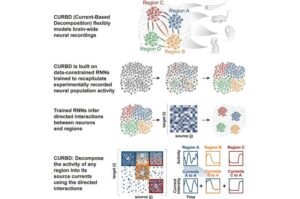
For decades, neuroscientists have been able to record which parts of the brain show increased electrical activity during a behavior, such as when we form a memory or make a decision. But scientists haven’t been able to determine how those regions are communicating with and influencing one another, nor identify which regions serve as the main orchestrators.

OKLAHOMA CITY, Aug. 10, 2026 /PRNewswire/ — Acarix AB (publ) today announced that the CADScor® System has received regulatory approval from the Emirates Drug Establishment (EDE) and the Ministry of Health and Prevention (MOHAP), clearing the way for commercial availability of the technology across the United Arab Emirates.
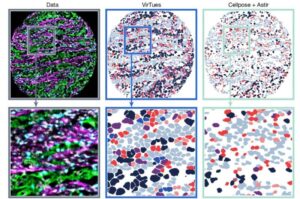
A tumor is more than its cancer cells. Immune cells, blood vessels and other surrounding tissue influence how a cancer grows and responds to treatment. Two tumors containing the same cell types can respond very differently to the same therapy depending on how those cells are arranged. Spatial proteomics captures this organization in molecular detail, but the resulting data, which contain many different variables, are difficult to interpret and compare across studies.
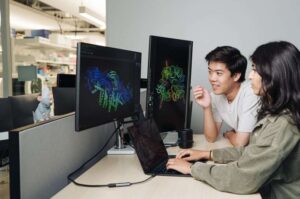
In science, the suffix “phage” means to devour. Thus, the name bacteriophage might conjure images of tiny creatures that “eat” bacteria. While that conception isn’t 100% scientifically accurate, bacteriophages are lethal killers of bacteria nonetheless, and scientists are excited about engineering phage DNA as a path to new antibiotics.