
FDA panel endorses GRAIL’s multi-cancer early detection test
The panel voted 7-2 vote in favour of GRAIL’S Galleri multi-cancer early detection (MCED) test’s benefits outweighing its risks.

The panel voted 7-2 vote in favour of GRAIL’S Galleri multi-cancer early detection (MCED) test’s benefits outweighing its risks.
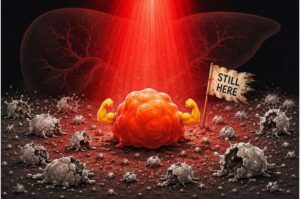
Many cancer treatments work by exploiting weaknesses in tumor cells, overwhelming their ability to survive, repair damage or continue growing. Yet some cancer cells manage to survive treatment. A new study from Texas A&M University sheds light on one reason why: Some cancer cells have a survival toolkit.
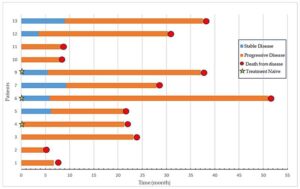
Uveal melanoma is a rare, aggressive cancer that starts inside the eye and often spreads to the liver. Few treatment options exist, and unlike some forms of skin melanoma that can respond well to modern therapies, metastatic uveal melanoma (MUM) remains difficult to treat.
Pancreatic cancer does not respond to most immunotherapies, but RAS inhibitors could alter tumors to make them more sensitive to a novel immunotherapeutic approach. In pancreatic tumors with RAS mutations, RAS inhibitors cause massive cell death and reduce immunosuppression. These changes tend to be temporary because tumors develop resistance to the therapy.
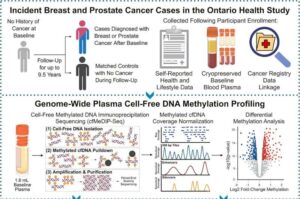
A study of blood samples collected up to nine years before a cancer diagnosis found changes in the DNA that captured the body’s response to early traces of cancer development.
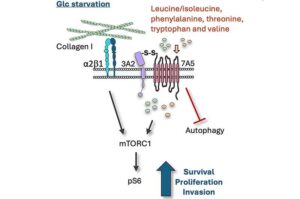
In a study focused on aggressive breast and pancreatic cancers, scientists have discovered how tumors surrounded by a protective “scaffold” of dense, scar-like tissue manage to thrive—despite the scaffold severely restricting the blood supply and nutrient delivery essential for growth.
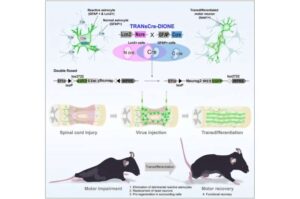
What if cells that form scars after a spinal cord injury could become part of the repair process? Researchers have developed a genetic system that converts certain scar-forming cells into neurons, improving movement in mice and rats with spinal cord injuries.
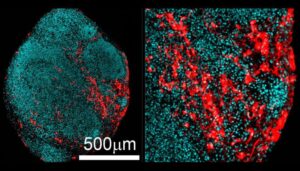
Tiny, year-old human brain organoids that mimic the brain of a newborn are providing new clues to potential treatments for a leading genetic cause of childhood epilepsy that typically manifests as the brain matures shortly after birth.
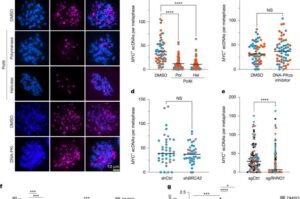
Researchers at Memorial Sloan Kettering Cancer Center (MSK) and their colleagues have discovered that a type of rogue DNA found in aggressive cancers has a hidden structural weakness—and that blocking a single repair protein can cause it to fall apart, suggesting a new therapeutic opportunity.
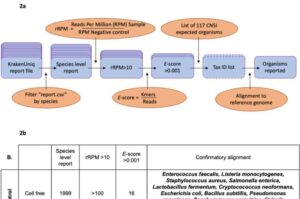
New research led by Aston University’s Dr. Ghaniah Hassan-Smith has found a new way to diagnose infections of the central nervous system, such as meningitis and encephalitis, that can be difficult to identify using conventional methods.