‘Click clotting’ stops bleeding fast and could transform emergency care
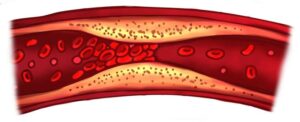
Researchers at McGill University have developed a rapid way to engineer blood clots that stop severe bleeding and support tissue healing more effectively.

Researchers at McGill University have developed a rapid way to engineer blood clots that stop severe bleeding and support tissue healing more effectively.

A pharmaceutical research team has identified a natural compound, timosaponin AIII (TAIII), that selectively eliminates CAR-T regulatory T cells.

Researchers at Karolinska Institutet, in collaboration with colleagues at The Scripps Research Institute and Emory University, have developed a new vaccine strategy that has generated antibodies capable of neutralizing highly divergent HIV variants.

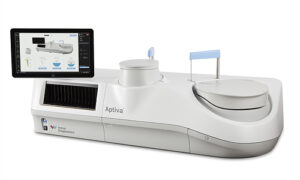
In a study published in the New England Journal of Medicine, researchers at UC San Francisco and UC Irvine show the device is as effective as a laboratory test and can detect cases even among people who have trouble producing phlegm samples from deep within their lungs.

Researchers at Johns Hopkins Medicine say they have successfully demonstrated that disrupting an eye structure long suspected of blocking the growth and survival of transplanted nerve cells may help restore vision in people with optic nerve damage.

Researchers developed the Cardiac Autoregressive Model for ECG Language-Modeling (CAMEL), an artificial intelligence model that treats ECG less like isolated snapshots and more like language.

Researchers developed a “tumor-on-a-chip” system designed to recreate that environment outside the human body, offering a more realistic way to study the disease and evaluate treatments.

Professor Iksung Kang (School of Electrical Engineering), in collaboration with Professor Na Ji’s research team at UC Berkeley, has developed a technology that accurately corrects image aberrations in microscopes used for live biological imaging.

An anonymous gift helped Tufts researchers speed up a project to develop new drugs that could prevent and treat Lyme disease

An AI model (REDMOD) can pick up the very early subtle tissue changes of pancreatic ductal adenocarcinoma, the most common form of pancreatic cancer, which conventional imaging and the human eye find difficult to detect, finds research published online in the journal Gut.