FDA grants speedy approval to Eli Lilly’s weight-loss pill for obesity
Federal regulators on Wednesday approved Eli Lilly’s new weight-loss pill, a second daily oral medication to treat obesity and other weight-related conditions.

Federal regulators on Wednesday approved Eli Lilly’s new weight-loss pill, a second daily oral medication to treat obesity and other weight-related conditions.

A research team from the Department of Orthopedics and Traumatology, School of Clinical Medicine, LKS Faculty of Medicine at the University of Hong Kong (HKUMed), has developed a titanium implant surface that can be activated by near-infrared (NIR). With just 15 minutes of NIR irradiation, this surface can eliminate 99.94% of Staphylococcus aureus (S. aureus) biofilms without the use of antibiotics, while simultaneously promoting bone-implant fusion.

Working with “digital twins” of patients’ hearts, doctors have improved cardiac ablation outcomes for patients with life-threatening arrhythmias. In the first clinical trials for cardiac digital twins technology, researchers at Johns Hopkins University created digital replicas of patients’ hearts, then tested procedures on those twins before performing them on the real thing. Working with digital twins resulted in faster and significantly more accurate procedures that reduced recurrences of arrhythmias for patients, compared to traditional methods.

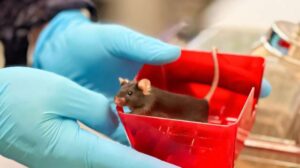
Melanoma is a deadly form of skin cancer that is typically removed surgically. Now, researchers publishing in ACS Nano report they have developed a potential noninvasive treatment for melanoma in the form of a stretchy, heat-activated patch similar to a bandage. When activated, the patch releases copper ions that kill the underlying cancer cells and prevent them from spreading. In tests with mice, the researchers say the patch reduced melanoma lesions without damaging surrounding tissue.

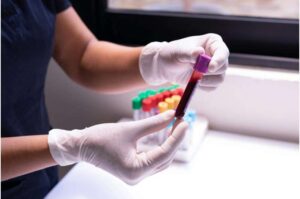
“Our hope is to be able to accurately diagnose several diseases at once with a single blood test in the future,” says Vogel, who led the study. He is an assistant professor, head of a research group, and part of the strategic research area MultiPark at Lund University.

Getting past the barrier surrounding the eye is a difficult but necessary part of treating retinoblastoma (RB)—a form of eye cancer that is more common in children. Once the barrier is penetrated, RB responds well to treatment. However, current methods, such as injections, chemotherapy, and radiotherapy, are painful and often cause vision loss and other serious side effects. But, a new method, described in a study published in Science Advances, might offer a safer, more effective way to treat RB.

As spring approaches, a new type of cicada is emerging — not an insect, but a new variant of COVID-19.

An acute pulmonary embolism occurs when a blood clot blocks one or more vessels in the lung. In patients at moderate or high risk, the blockage can impair the heart’s ability to pump blood through the lungs to such an extent that it becomes life-threatening. About 15% of those affected die as a result of acute pulmonary embolism. Blood-clot-dissolving medications, known as thrombolytics, can effectively dissolve vascular blockages. However, they increase the risk of severe bleeding, particularly in the brain. For this reason, they are generally used only in the most severe cases.

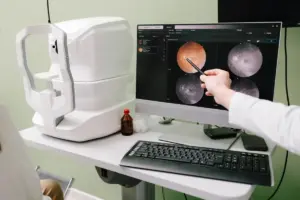
Scientists led by Botond Roska at the Institute of Molecular and Clinical Ophthalmology Basel (IOB) and collaborators have identified genetic pathways and compounds capable of protecting cone photoreceptors from the degeneration that underlies conditions like age-related macular degeneration.

Novo Nordisk announced today that it received FDA approval for Awiqli, the first and only once-weekly, long-acting basal insulin.