
New imaging tools help cancer researchers see inside living cells
The research, published in Nature Methods, introduces a series of fluorescent dyes that make it much easier to take ultra‑detailed images of living cells.

The research, published in Nature Methods, introduces a series of fluorescent dyes that make it much easier to take ultra‑detailed images of living cells.

Researchers have developed a compact camera that captures ultraviolet, near-infrared, and visible images using a single chip.
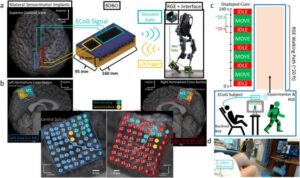
A team is building a fully implantable brain-computer interface (BCI) that allows patients to use their thoughts to control wearable robotic legs
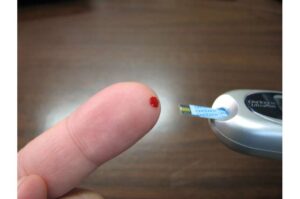
Researchers at Karolinska Institutet and KTH Royal Institute of Technology in Sweden have developed an improved method for creating insulin-producing cells from human stem cells.

Aging doesn’t just slow the body. It can quietly cloud the mind. For many people, that shows up as brain fog, with slower thinking, fading memory, and a growing sense that the brain isn’t working quite like it used to.

MIT scientists create a detailed map of exactly what happens in the brains of C. elegans worms when they “follow their nose” to savor attractive odors or avoid unappealing ones.

The CYBORG study aims to assess the efficacy, safety and usability of the system.
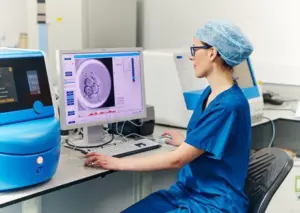
AI will soon enable clinicians to predict ovulation and optimize IVF cycle timing, improving outcomes and operational efficiency.
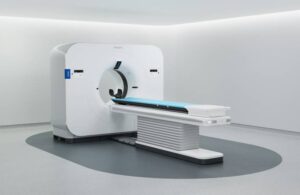
Philips (NYSE:PHG) announced today that it received FDA 510(k) clearance for its AI-powered Spectral CT Verida system.
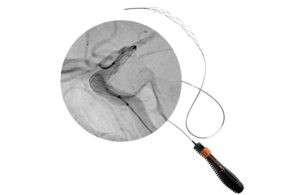
Rapid Medical announced today that it received FDA clearance for the Tigertriever 25 thrombectomy device, its latest addition to the platform.