
Portable test could help distinguish Ebola, Lassa where lab testing is limited
Cornell researchers have developed a portable diagnostic test that can simultaneously detect and distinguish Ebola and Lassa.

Cornell researchers have developed a portable diagnostic test that can simultaneously detect and distinguish Ebola and Lassa.
Tumors require a blood supply to grow and survive. The blood vessels that nourish tumors can have different characteristics across cancer types and could be connected to patient survival and outcomes. Researchers from Mass General Brigham Cancer Institute, the Broad Institute of MIT and Harvard, and Harvard T.H. Chan School of Public Health conducted a prospective cohort study using advanced imaging techniques to microscopically characterize colorectal tumor vessels.
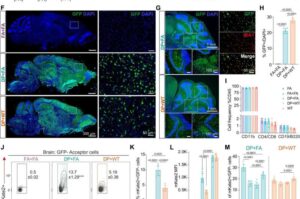
Bone marrow transplants offer an unexpected way for diseased cells in the heart and brain to get replacement parts, a Stanford Medicine-led study has shown. The finding offers hope for the first effective treatment of mitochondrial disorders, a group of genetic diseases in which cells’ motors, called mitochondria, are dysfunctional.

Alzheimer’s disease is the most common form of dementia worldwide. Although the APOE ε4 allele is the strongest genetic risk factor for late-onset Alzheimer’s disease, not all carriers develop dementia, indicating that other genetic factors can modify disease risk. In recent years, PLCG2 has emerged as one of the most important protective genes associated with Alzheimer’s disease.
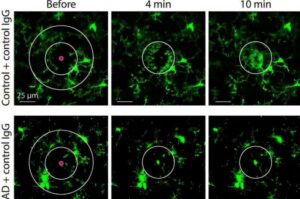
Professor Minah Suh of the Department of Biomedical Engineering at Sungkyunkwan University, in collaboration with the biotechnology company IMNEWRUN and Professor Ho-Keun Kwon’s team at Yonsei University College of Medicine, has identified a mechanism by which modulating an immune protein in the brain can restore a disrupted brain immune environment and reduce abnormally elevated neuronal activity in an animal model of Alzheimer’s disease.
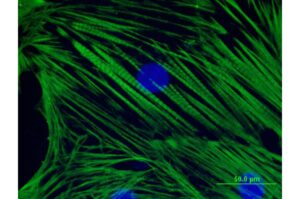
Researchers led by Assistant Professor Lynn Yap of the Lee Kong Chian School of Medicine at Nanyang Technological University, Singapore, have uncovered new insights into how unspecialized cells, also known as stem cells, develop and mature into heart muscle cells. The findings could pave the way for new treatments for heart disease.
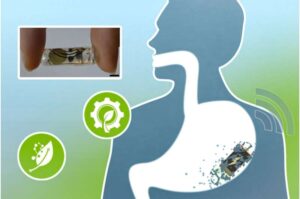
Using materials safe for human consumption, MIT researchers have created tiny batteries that could be used to power ingestible electronic devices. Such batteries could make the devices safer for patients and minimize the environmental impact of the batteries after they are excreted.

Composition of matter patent secures exclusive protection for Anixa’s breast cancer vaccine in Australia through 2040, expanding the Company’s growing global IP estate
IDE approval enables initiation of the pivotal Safety in Ovarian Cancer for Average-Risk Women – Analysis (“SOARA”) Clinical Validation Study following Institutional Review Board approval
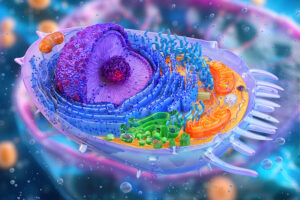
Tracking down senescent cells, which accumulate as we age, could help diagnose age-related disorders and guide researchers working on new treatments.