
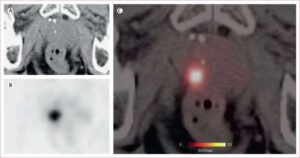
Prostate cancer: Specialized imaging could prevent unnecessary biopsies
An elevated PSA level in the blood may indicate prostate cancer but does not allow for a definitive diagnosis. Where there is a corresponding suspicion, a tissue sample is usually taken from the prostate. A study by the Medical University of Vienna now shows that a specialized form of imaging—known as PSMA-PET/CT—could provide important additional information even before such a biopsy is carried out.

New ablation approach improves outcomes for persistent atrial fibrillation
Atrial fibrillation is the most common cardiac arrhythmia and increases the risk of conditions such as stroke and heart failure. An established treatment is catheter ablation, in which physicians use thin catheters to create small scars in heart tissue to block the electrical signals that cause the arrhythmia. Despite treatment, many patients with the more difficult-to-treat form, persistent atrial fibrillation, experience recurrence.

Experimental cancer vaccine makes its own oxygen and gives T-cells a boost
When it comes to priorities in life, oxygen tops the list. Humans can go weeks without food and days without water. Take away the ability to breathe, however, and the clock starts ticking within minutes as the brain begins shutting down. But the life-giving gas does even more heavy lifting than you might think.

Experimental drug shows potential for hard-to-treat heart disease
An experimental drug has been shown to improve symptoms, exercise capacity and heart failure status in patients with an inherited heart disease, according to a pair of newly published studies.

Scholar Rock secures first FDA approval for muscle-targeting rare disease drug
Scholar Rock’s spinal muscular atrophy drug, now to be called Isembyld, was originally rejected in September 2025, when the FDA cited compliance problems at a third-party manufacturer.
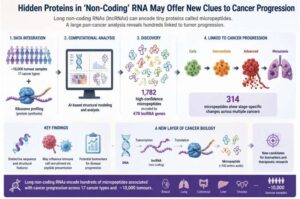
Hidden proteins in ‘non-coding’ RNA may offer new clues to cancer progression
Scientists have long believed that large stretches of our genetic material, known as long noncoding RNAs (lncRNAs), help regulate genes but do not produce proteins. A new study by Stav Zok and Professor Michal Linial from the Hebrew University of Jerusalem suggests that this picture is incomplete.
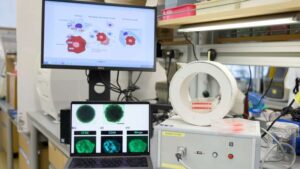
Magnetic pulses reprogram immune cells to fight breast cancer in preclinical models
Researchers from the National University of Singapore (NUS) have demonstrated an innovative approach for targeted breast cancer therapy using pulsed electromagnetic fields (PEMFs). The NUS team successfully reprogrammed tumor-associated macrophages (TAMs), a corrupted class of immune cells that typically promote cancer growth, into an active anti-tumor state that attacks and destroys cancer cells.
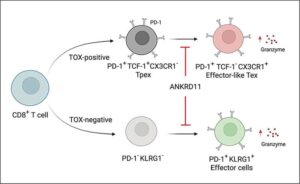
Blocking gene boosts T-cell attacks on chronic hepatitis B virus and tumors
A research team led by Professor Zhou Xuyu from the Institute of Microbiology of the Chinese Academy of Sciences (CAS), in collaboration with researchers from Beijing Ditan Hospital and Capital Medical University, has identified ANKRD11 as a key regulator that reduces the activity of CD8+ T cells during chronic hepatitis B virus (HBV) infection and cancer. The researchers found that ANKRD11 suppresses the AP-1 signaling pathway, which usually helps CD8+ T cells mount effective responses against infections and tumors.