
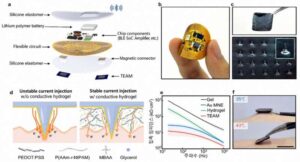
Smartphone-controlled microneedle patch could offer drug-free pain care from afar
A “wearable electroceutical” has been developed that could reduce the need to visit a hospital or rely on painkillers every time pain occurs. When attached to the skin, it modulates pain through electrical stimulation and can be remotely controlled via smartphone even across long distances, such as between Korea and the United States.

Brain-computer interface enables avatar speech and gestures for people with paralysis
A scientific team has shown that a new brain-computer interface (BCI) can allow people with vocal tract and bodily paralysis to convey both speech and upper-body gestures simultaneously. While BCIs have facilitated one or the other in the past, this new system is the first to enable both modes of communication at once, more closely replicating natural expression.
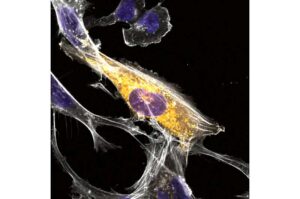
Microproteins provide new playbook for Alzheimer’s research
Scientists researching Alzheimer’s disease and neurodegeneration have been playing a difficult game. Their scientific playbook has been limited by the available resources that, while capturing loads of genes, proteins and cells, have been missing something: microproteins.
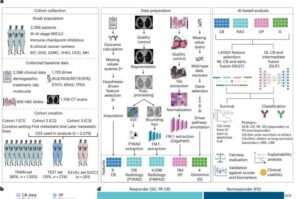
AI tool successfully predicts outcomes of immunotherapy in lung cancer
Artificial intelligence (AI) tools can help physicians predict treatment and survival outcomes in patients with advanced non-small cell lung cancer (NSCLC) treated with immunotherapy, according to a new study published in Nature Medicine. The study reported findings from the I3LUNG project, a large international trial aimed at improving the treatment of metastatic NSCLC by developing AI-based predictive models that can help determine the best therapeutic approach for each individual.
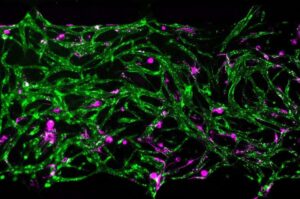
Miniaturized bone marrow-on-a-chip tracks human immune cells as they build lasting antibody defenses
A scientific team has developed a laboratory model that reveals how antibody-producing plasma cells migrate, mature and survive within human bone marrow, a main location of long-lived antibody-producing plasma cells. The platform combines a lymph node-mimicking organoid with a tissue chip that mimics bone marrow, allowing scientists to observe key stages of plasma cell development that have been difficult to study in humans.

Engineered antibodies offer broad protection against deadly cobra toxins
A research team has developed a recombinant, nanobody-based antivenom that offers broad protection against venom from geographically diverse cobra and king cobra species in India. The study is published in Science Translational Medicine and includes researchers at the Centre for Ecological Sciences (CES), Indian Institute of Science (IISc), and collaborators at the Technical University of Denmark (DTU).
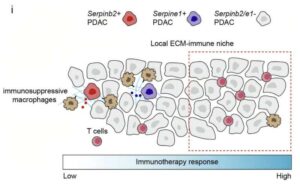
Pancreatic tumors use clotting pathway to build immune shields, study finds
Researchers at the Icahn School of Medicine at Mount Sinai have found that small populations of pancreatic cancer cells can create localized immune-protective niches that shield tumors from immune attack. The finding could open new avenues for making immunotherapy more effective against one of the deadliest forms of cancer.
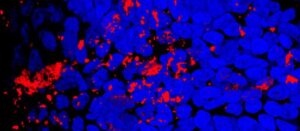
Wound-healing peptides curb bacterial colonization in cystic fibrosis airway models
Cystic fibrosis, one of the most common genetic diseases in Switzerland, promotes chronic bacterial infections by impairing the protective barrier of the airways. Scientists at the University of Geneva (UNIGE) have discovered that this dysfunction is caused by the abnormal activation of a protein, connexin 43, which disrupts cellular organization and compromises the integrity of the airways.