
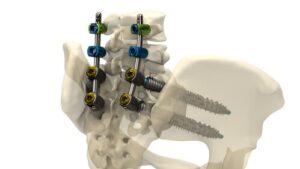
Genesys Spine Announces Launch of the SIros-X™ System for Sacroiliac Joint Fusion and Pelvic Fixation of Pedicle Screw Constructs
AUSTIN, Texas, March 31, 2026 /PRNewswire/ — Genesys Spine today announced the successful completion of the first surgical procedure utilizing the SIros-X System, a next-generation solution designed to deliver precision, adaptability, and control for complex sacroiliac joint fusion and pelvic fixation. The inaugural case was performed by Scott L. Parker, M.D., at Ascension Saint Thomas Hospital Midtown, Nashville, TN, marking an important milestone as the system begins clinical use.

Medtronic wins CE mark for OmniaSecure defibrillation lead
Medtronic (NYSE:MDT) today announced CE mark approval and the first commercial European implants for its OmniaSecure system.

New Cicada COVID Variant (BA.3.2) Shows Ability to Evade Immune Defenses
As spring approaches, a new type of cicada is emerging — not an insect, but a new variant of COVID-19.

Catheter-directed clot treatment cuts early collapse risk in pulmonary embolism trial
An acute pulmonary embolism occurs when a blood clot blocks one or more vessels in the lung. In patients at moderate or high risk, the blockage can impair the heart’s ability to pump blood through the lungs to such an extent that it becomes life-threatening. About 15% of those affected die as a result of acute pulmonary embolism. Blood-clot-dissolving medications, known as thrombolytics, can effectively dissolve vascular blockages. However, they increase the risk of severe bleeding, particularly in the brain. For this reason, they are generally used only in the most severe cases.

20,000 lab-grown human retinas reveal how cone photoreceptor cells resist degeneration
Scientists led by Botond Roska at the Institute of Molecular and Clinical Ophthalmology Basel (IOB) and collaborators have identified genetic pathways and compounds capable of protecting cone photoreceptors from the degeneration that underlies conditions like age-related macular degeneration.

Organ-on-a-chip technology replicates decades of human aging in just four days
Over one billion people worldwide are over 60, and the population is projected to more than double by 2050. But as more people live into their 60s, 70s, and 80s, health care systems across the globe may face new challenges as they attempt to manage associated increases in age-related disease.

Placing battery tech directly on tissue to deliver lithium ions for targeted pain relief
A new study from the University of Chicago taps an ingredient most often used in the lithium-ion batteries that power our devices to open new avenues in biomedical technology. Lithium plays vital roles in the body, but taking it orally can have unwanted side effects—so a pair of UChicago chemistry labs teamed up to find a way to deliver lithium only to the exact places where it’s needed.

Butterfly Network strikes US first with POCUS gestational age tool clearance
Butterfly’s GA tool within its point-of-care ultrasound (POCUS) system is intended for rollout in regions with socioeconomic barriers to obstetric imaging services.