Axsome wins first non-antipsychotic FDA approval for Alzheimer’s agitation
Alzheimer’s disease agitation could mean peak sales of over $2.1 billion for Axsome’s Auvelity, according to analysts at William Blair.

Alzheimer’s disease agitation could mean peak sales of over $2.1 billion for Axsome’s Auvelity, according to analysts at William Blair.

The TAVVE study will begin later this year with ten patients, whose 30-day safety results will be submitted to the FDA.

New research out of VCU Massey Comprehensive Cancer Center has uncovered a targeted cancer therapy that significantly prevents leukemia progression, improves survival rates and minimizes damage to surrounding healthy tissue.

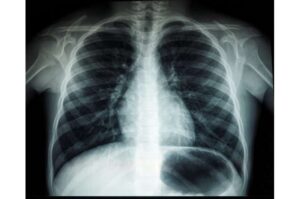
Led by researchers from Heidelberg Faculty of Medicine at Heidelberg University and the University of California, San Francisco (U.S.), an international team has evaluated a novel approach for the diagnosis of tuberculosis.

A research team led by Director Myung Kyungjae at the Center for Genomic Integrity within the Institute for Basic Science (IBS), in collaboration with Lee Joo-Yong (Chungnam University) has now uncovered a new strategy to overcome this resistance. T

Researchers at McGill University have developed a rapid way to engineer blood clots that stop severe bleeding and support tissue healing more effectively.

A pharmaceutical research team has identified a natural compound, timosaponin AIII (TAIII), that selectively eliminates CAR-T regulatory T cells.

Researchers at Karolinska Institutet, in collaboration with colleagues at The Scripps Research Institute and Emory University, have developed a new vaccine strategy that has generated antibodies capable of neutralizing highly divergent HIV variants.

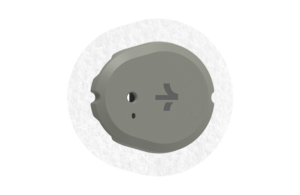
In a study published in the New England Journal of Medicine, researchers at UC San Francisco and UC Irvine show the device is as effective as a laboratory test and can detect cases even among people who have trouble producing phlegm samples from deep within their lungs.

Researchers at Johns Hopkins Medicine say they have successfully demonstrated that disrupting an eye structure long suspected of blocking the growth and survival of transplanted nerve cells may help restore vision in people with optic nerve damage.