Two Children With a Rare Epilepsy Mutation Show Improvement After Personalized Genetic Treatment
Personalized genetic therapy helped researchers treat two children with a rare form of epilepsy, enabling one to walk independently for the first time.

Personalized genetic therapy helped researchers treat two children with a rare form of epilepsy, enabling one to walk independently for the first time.
Prions can turn the body’s own proteins into a threat, and studying this group of diseases could help us better understand dementia.
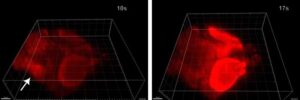
Seizures can race through the brain in seconds, making them difficult to capture in detail. To overcome this challenge, researchers have developed a new high-resolution light-sheet imaging system that is fast enough to image seizure propagation in the brain of a larval zebrafish in 3D.
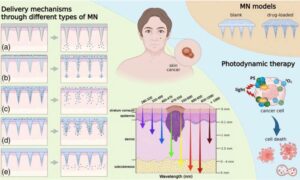
Photodynamic therapy (PDT) uses a light-sensitive drug and a specific wavelength of light to destroy cancer cells. The treatment has become an important option for certain skin cancers because it can target diseased tissue while limiting damage to surrounding skin. But PDT has a fundamental challenge: both the drug and the light must reach the same area of tissue.

Casana announced today that it launched the Smart Seat, a smart toilet seat capable of measuring a range of metrics.
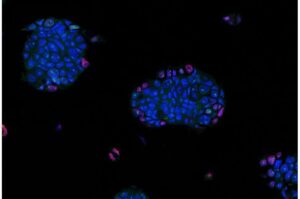
Significant advances have been made in the development of patient-derived tumor “organoids” for preclinical research in two new studies led by Weill Cornell Medicine investigators. Organoids are three-dimensional clumps of cells that mimic structural and functional features of an organ, tumor or other tissue. The advances represent progress in precision medicine and point to the more routine use of tumor organoids as models for evaluating and optimizing cancer treatments.
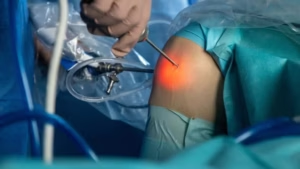
BRIJ-SEAL creates a protective, flexible seal over the incision that lasts for up to 14 days.

A machine learning tool that analyzes information already captured in a child’s electronic health record helped pediatricians more accurately assess asthma risk in standardized clinical case scenarios, according to a pilot randomized clinical trial led by a Regenstrief Institute researcher.
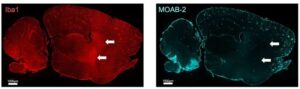
There’s a small fire isolated in your kitchen. If you had the right tool, you might be able to put it out. But before you can, the sprinklers turn on and flood your entire house. An automatic response to an issue has now damaged everything you own. That’s akin to what happens in the brains of people with Alzheimer’s: Amyloid plaques, sticky protein clumps that build up in the brain, are the fire in the kitchen. Microglia, the brain’s resident immune cells, are the sprinklers. A mechanism designed to protect the body ends up hurting it.
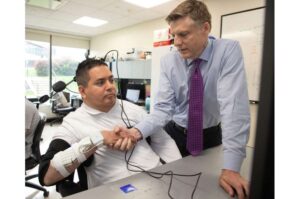
A neuroprosthetic system has helped a man with paralysis move his hand and feel touch again following a spinal cord injury, reports research published in Nature Medicine.