Novel diabetic wound treatment turns cells into manufacturers
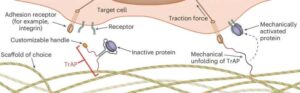
Zhao is part of a team working on a potential solution: a novel wound dressing that uses materials created by human cells—without including the cells themselves.

Zhao is part of a team working on a potential solution: a novel wound dressing that uses materials created by human cells—without including the cells themselves.

New research from Binghamton University and Drexel University looks at a different, lesser-studied issue that also hurts patients and their quality of life: how Parkinson’s affects the human vascular system.

Soft electrodes designed to perfectly match a person’s brain surface may help advance neural interfaces for neurodegenerative disease monitoring and treatment, according to a new study led by Penn State researchers.

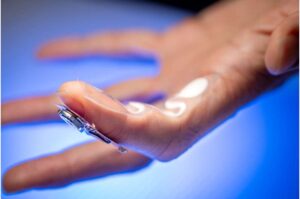
A UCLA-led research team has now developed a microneedle sensor platform designed to address that problem through continuous, minimally invasive monitoring in skin.

We asked if it would be possible to first implant a small-scale liver construct and then drive it to expand in the body following its engraftment.

Researchers from the MOSAIC team at the Paris Brain Institute have developed mosaic human cortical organoids carrying mutations in the DEPDC5 gene in order to model focal cortical dysplasia.

The research, published in Nature Methods, introduces a series of fluorescent dyes that make it much easier to take ultra‑detailed images of living cells.

Researchers have developed a compact camera that captures ultraviolet, near-infrared, and visible images using a single chip.

A team is building a fully implantable brain-computer interface (BCI) that allows patients to use their thoughts to control wearable robotic legs

Researchers at Karolinska Institutet and KTH Royal Institute of Technology in Sweden have developed an improved method for creating insulin-producing cells from human stem cells.