Australian bee glue delivers a scar-fighting compound that shuts down raised scars before they take hold
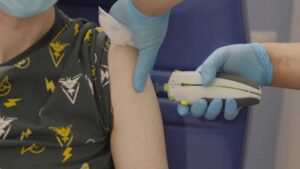
A natural compound made by Australian bees to seal their hives may help stop scarring in human skin after surgery, injury and burns.

A natural compound made by Australian bees to seal their hives may help stop scarring in human skin after surgery, injury and burns.

A national study led by investigators from Cedars-Sinai Health Sciences University found that transcatheter tricuspid valve replacement, or TTVR, delivered strong early results in real-world practice.

A study by investigators at Mass General Brigham has found that a blood test of plasma phosphorylated tau 217 (pTau217), an Alzheimer’s disease biomarker, can predict the progression of amyloid PET scan changes and cognitive decline in cognitively healthy older adults.

Scientists have taken an important step toward a gene therapy that could one day turn off the extra genetic material that causes Down syndrome (DS)

A new study suggests a simple letter change can reverse sex development, causing a mouse with female chromosomes (XX) to develop male genitalia.

Phase 2 randomized trial shows 38% reduction in risk of death with the drug when combined with chemotherapy

A research team has developed a “self-regulating OLED wound healing patch” that combines light and drugs to pull up the wound recovery speed by about twice.

A major multi-site clinical trial co-led by researchers at Washington University School of Medicine in St. Louis has shown that post-thrombotic syndrome—a common and often painful complication suffered by many people who have experienced blockages of major veins due to blood clots—can be effectively treated with a minimally invasive procedure.

A Korean research team has developed a low-frequency-based wireless sensor technology.

Learn how an isolated but collaborative bird species shows that close social contact can shape our gut microbes in surprising ways.