AI helps accelerate breast cancer diagnosis for high-risk women
Researchers used an open-source AI model called Mirai, which was developed by the study’s senior author, UC Berkeley data scientist Adam Yala, Ph.D.

Researchers used an open-source AI model called Mirai, which was developed by the study’s senior author, UC Berkeley data scientist Adam Yala, Ph.D.

Di Wang, Ph.D., and Y. Shrike Zhang, Ph.D., of the Division of Engineering in the Mass General Brigham Department of Medicine, the lead and senior authors of the study published in Nature Biomedical Engineering, developed a special gel-like material whose expansion speed and final size can be carefully controlled. The paper is titled “4D-printed adaptive hydrogel tissue expanders for ear and breast reconstruction.”

MIT engineers have developed a noninvasive pacemaker that stimulates the heart using ultrasound. The design could one day provide a surgery-free alternative to traditional cardiac implants.

Researchers from the Icahn School of Medicine at Mount Sinai have uncovered the first direct evidence that deep brain stimulation (DBS) can remodel white matter pathways in the brain and alter communication across large-scale neural networks, revealing a previously unrecognized mechanism that may explain how the therapy helps patients recover from severe depression.

Philips (NYSE:PHG) announced today that it received FDA clearance for its Elevate Plus advanced imaging and AI and automation capabilities.

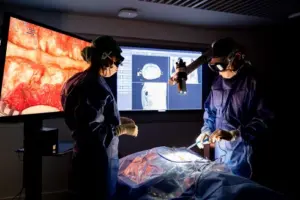
Pulmera announced today that it received FDA 510(k) clearance for its CBeam 3D intraoperative imaging platform.

Edwards Lifesciences (NYSE:EW) said today that it received FDA approval for Triformis Resilia, its surgical tricuspid valve replacement.
Developed by an international team, led by scientists at UCL and at the Allen Institute (Seattle, US), the research forms part of a project investigating Neuropixels probe technology.

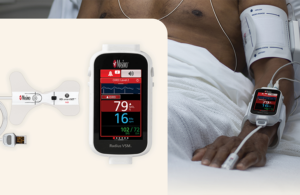
The technology records tiny electrical changes in your wrist using bioimpedance, a measure of how easily electricity flows through blood and tissue. Because blood flow changes with each heartbeat, these electrical signals carry information about the underlying pressure.

The development coincides with several steps by SHINE Technologies to broaden its position in nuclear medicine.