Supira gets FDA green light to conduct ventricular assist device study
Supira Medical announced today that it received FDA approval to initiate a new trial of its percutaneous ventricular assist device (pVAD).

Supira Medical announced today that it received FDA approval to initiate a new trial of its percutaneous ventricular assist device (pVAD).

Researchers at the Institute of Biomedical Engineering at the University of Toronto have demonstrated a new way to monitor transplanted stem-cell-derived heart cells using magnetic resonance imaging (MRI).

Stem cell transplantation could be a rapid and effective way to restore hemoglobin production in individuals with the blood disorder β-thalassaemia.

A new single-cell technology is giving scientists their clearest view yet of immune cell behavior—capturing not just genetic intent, but real-time activity.

Carnegie Mellon researchers have proven that widely available earbuds can double as heart-monitoring devices, capturing subtle cardiac activity with near-clinical accuracy and potentially expanding access to long-term, at-home care.

Now, a research team led by Prof. Dr. Kai Wollert, Head of Molecular and Translational Cardiology at the Department of Cardiology and Angiology at Hannover Medical School (MHH), has discovered that a microprotein called BRICK1 plays a key role in this process.

A new study published in Cell from a team of investigators from the Stanford Departments of Urology and Radiation Oncology, in close collaboration with colleagues from Stanford Cancer Institute, offers a powerful new approach: using a non-invasive urine test to determine, at a molecular level, who benefits from additional therapy—and who does not.

MILFORD, Mass., April 8, 2026 /PRNewswire/ — Waters Corporation (NYSE: WAT) today announced that the U.S. Food and Drug Administration (FDA) has cleared the Onclarity HPV Self-Collection Kit and approved the BD Onclarity HPV Assay with extended genotyping for at-home use, marking a significant milestone in expanding access to cervical cancer screening, and removing barriers that currently prevent many individuals from receiving routine screening.

Researchers uncovered how cells selectively destroy certain microRNAs — key gene regulators — through a mechanism that requires two RNA signals working together.

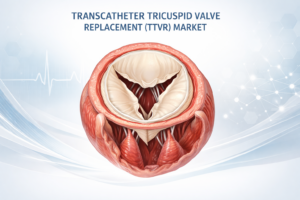
TriCares announced today that it received FDA investigational device exemption (IDE) to study its Topaz heart valve replacement system.