
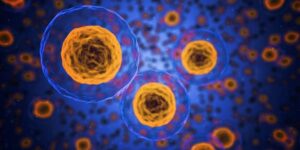
Newly discovered inflammatory cell signaling could open the door to autoimmune disease treatments
Our understanding of how cells interact with each other has been driven for decades by the central concept of receptor-mediated signal transduction. Now, researchers from Boston Children’s Hospital are reporting the discovery of a new, receptor-free means of signal transduction.

Computer-designed T-cell receptors boost attacks on cancer and viral targets in early tests
A joint team of researchers at Bar-Ilan University and the Weizmann Institute has used advanced computational design methods to enhance the ability of genetically engineered immune cells to recognize and attack cancer and viral targets.
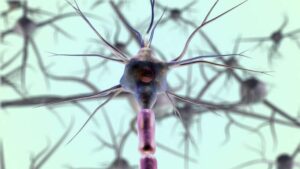
Experimental drug reverses paralysis and vision loss in multiple sclerosis model
A drug developed by a UVA Health scientist has not only stopped but reversed paralysis and vision loss in a mouse model of multiple sclerosis. The results are striking because existing MS treatments are designed to reduce future inflammatory attacks, not restore neurological function already lost.
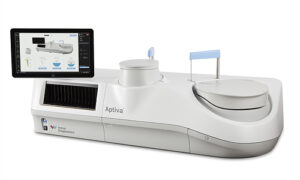
Werfen Announces US FDA 510(k) Clearance and CE Mark for Aptiva® Antiphospholipid Syndrome IgA Reagent
FDA Clearance and CE Mark Complete Aptiva’s Antiphospholipid Syndrome Portfolio, Expanding Global Access to Comprehensive APS Testing
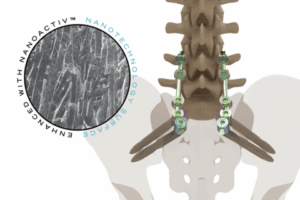
Xenix Medical Receives FDA Clearance for Riva Anchor Spinopelvic Fixation System
Xenix Medical has announced FDA 510(k) clearance for its Riva Anchor Spinopelvic Fixation System, designed to facilitate fusion of the sacroiliac joint at the base of a posterior lumbar or thoracolumbar fusion construct.
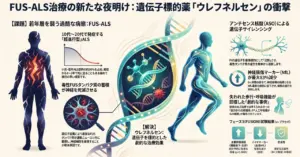
Ionis-Otsuka offer ‘groundbreaking’ improvement in function and survival for genetic type of ALS
Ulefnersen, an RNA-targeted therapy being developed by Ionis Pharmaceuticals and Otsuka Pharmaceutical, improved measurements of functional impairment and survival in patients with a rare, genetic ALS subtype in a Phase 3 trial.
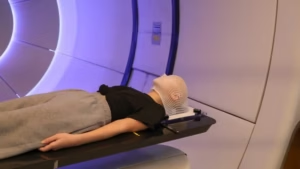
FDA clears Myrava’s patient-specific bolus device
The device is intended to help clinicians control radiation dose delivery and improve positioning during radiotherapy.

NET Recovery wins FDA breakthrough tag for psychostimulant addiction device
NET Recovery’s device applies neurostimulation to quell cravings in individuals with stimulant use disorder.