
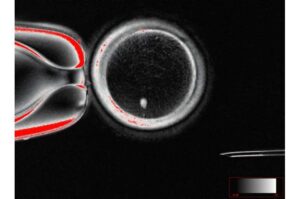
Proof-of-concept study creates functional eggs from human skin cells to treat infertility
Researchers at Oregon Health & Science University have accomplished a unique proof of concept to treat infertility by turning skin cells into eggs capable of producing early human embryos. The research is published in Nature Communications.

Advanced AI tool detects tiny brain lesions in children with epilepsy
An advanced AI tool can detect tiny brain lesions that cause severe epilepsy in children, allowing faster diagnosis, more precise treatment and a potential cure, according to a new study.
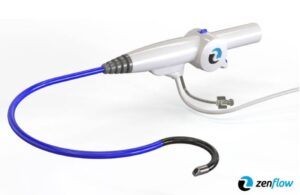
Zenflow gets FDA nod for single-use cystoscope
Zenflow announced today that it received FDA 510(k) clearance for its Spring scope and camera control unit (CCU).
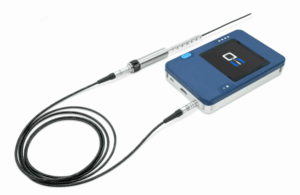
Outlook Surgical wins FDA clearance for hybrid endoscope system
Outlook Surgical this week announced it received FDA 510(k) clearance for its Inova 1 Towerless Endoscope System.
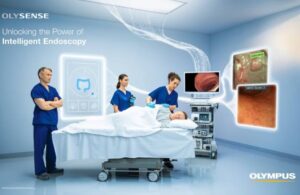
Olympus launches Olysense AI-powered colorectal polyp detection platform
Olympus announced today that it launched its Olysense platform with Caddie medical device software for early colorectal polyp detection.
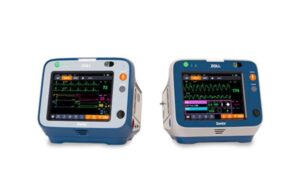
FDA approves new Zoll Zenix monitor/defibrillator
Zoll announced today that it received FDA premarket approval (PMA) for its Zenix professional monitor/defibrillator.

Relief Cardiovascular announces first human use of smart heart implant
Relief Cardiovascular today announced the successful first-in-human use of its transcatheter smart heart implant.

Abbott wins Health Canada approval for Esprit drug-eluting, dissolving scaffold
Abbott (NYSE: ABT)+
said Health Canada authorized its Esprit BTK Everolimus Eluting Resorbable Scaffold System, a dissolving stent for patients with chronic limb-threatening ischemia (CLTI) below the knee.