
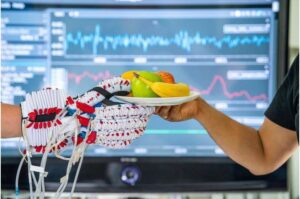
Special glove helps people with paralyzed hands grasp objects
The Technical University of Munich (TUM) has developed a soft, pneumatic glove that restores the ability of people with paralyzed hands to grasp object
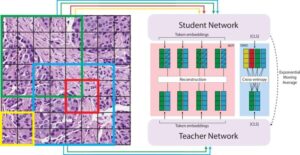
AI test predicts breast cancer recurrence in hours, not weeks, across 3,500 patients
In recent years, notable advances have been made in diagnosing and treating breast cancer. However, its recurrence continues to plague thousands, deepening the need to find ways to better predict the likelihood of its return.
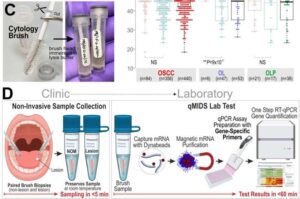
New brush test detects oral cancer in one hour
A paper published in the journal Biomarker Research by a cross-university team led by Queen Mary University of London researchers validates the use of a noninvasive brush biopsy test that can detect oral cancer within one hour.
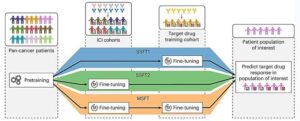
AI tool improves prediction of who will respond to cancer immunotherapy drugs
A new artificial intelligence model called COMPASS, developed by Harvard Medical School researchers and their colleagues, improves prediction of which patients are most likely to respond to ICIs.
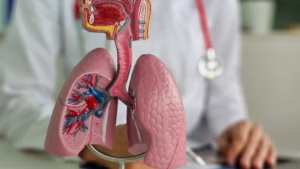
Median Technologies receives CE marking for eyonis LCS
The CE marking by GMED recognises compliance with patient safety and clinical efficacy for Class IIb devices.
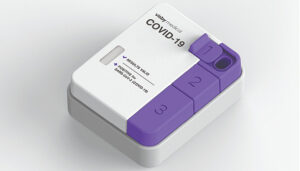
FDA clears Visby Medical’s at-home Covid-19 and Influenza PCR test
Visby’s multi-viral Medical Flu and Covid-19 test yields results in 30 minutes.
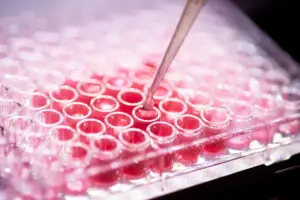
World’s First Synthetic Cell With a Complete Life Cycle Marks Biology Breakthrough
In a preprint published in bioRxiv, the team describes SpudCell. The system could grow, copy its DNA, divide, and take in fresh materials from smaller bubble-like structures nearby. When the team gave one version a genetic change that helped it feed more efficiently, those cells grew faster and became more common over five generations.
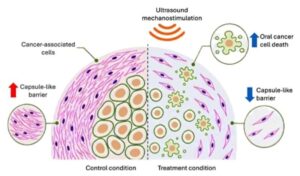
Using ultrasound to attack oral cancer cells
In a new study, researchers at the Indian Institute of Science (IISc), in collaboration with clinicians at MS Ramaiah Medical College and Hospitals, explored whether low-frequency ultrasound mechanical stimulation could selectively kill oral cancer cells.