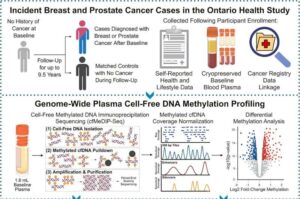
Blood tests could identify early signs of cancer years before diagnosis
A study of blood samples collected up to nine years before a cancer diagnosis found changes in the DNA that captured the body’s response to early traces of cancer development.

A study of blood samples collected up to nine years before a cancer diagnosis found changes in the DNA that captured the body’s response to early traces of cancer development.
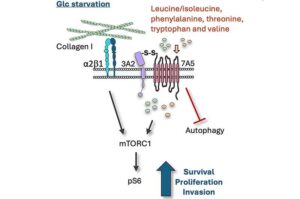
In a study focused on aggressive breast and pancreatic cancers, scientists have discovered how tumors surrounded by a protective “scaffold” of dense, scar-like tissue manage to thrive—despite the scaffold severely restricting the blood supply and nutrient delivery essential for growth.
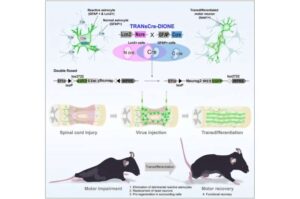
What if cells that form scars after a spinal cord injury could become part of the repair process? Researchers have developed a genetic system that converts certain scar-forming cells into neurons, improving movement in mice and rats with spinal cord injuries.
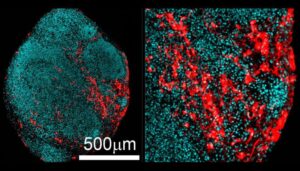
Tiny, year-old human brain organoids that mimic the brain of a newborn are providing new clues to potential treatments for a leading genetic cause of childhood epilepsy that typically manifests as the brain matures shortly after birth.
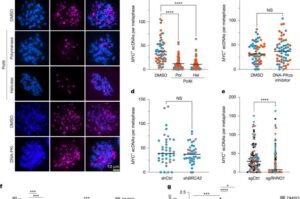
Researchers at Memorial Sloan Kettering Cancer Center (MSK) and their colleagues have discovered that a type of rogue DNA found in aggressive cancers has a hidden structural weakness—and that blocking a single repair protein can cause it to fall apart, suggesting a new therapeutic opportunity.
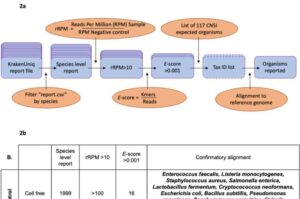
New research led by Aston University’s Dr. Ghaniah Hassan-Smith has found a new way to diagnose infections of the central nervous system, such as meningitis and encephalitis, that can be difficult to identify using conventional methods.

Researchers at Trinity College Dublin, in collaboration with Breye Therapeutics, have found that an oral medication (“Danegaptide”) can protect against vision-threatening damage in nonproliferative diabetic retinopathy (NPDR), a leading cause of blindness in working-age adults.
Our understanding of how cells interact with each other has been driven for decades by the central concept of receptor-mediated signal transduction. Now, researchers from Boston Children’s Hospital are reporting the discovery of a new, receptor-free means of signal transduction.
A joint team of researchers at Bar-Ilan University and the Weizmann Institute has used advanced computational design methods to enhance the ability of genetically engineered immune cells to recognize and attack cancer and viral targets.
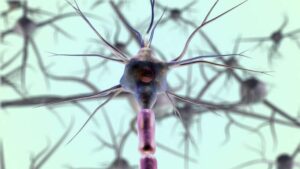
A drug developed by a UVA Health scientist has not only stopped but reversed paralysis and vision loss in a mouse model of multiple sclerosis. The results are striking because existing MS treatments are designed to reduce future inflammatory attacks, not restore neurological function already lost.