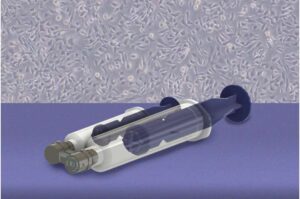
Stem cells at the root of tooth aging point to possible treatment
A research team led by Fanyuan Yu from Sichuan University, China, has now discovered one of the mechanisms of DPSC senescence and identified a potential strategy to counter it.

A research team led by Fanyuan Yu from Sichuan University, China, has now discovered one of the mechanisms of DPSC senescence and identified a potential strategy to counter it.

Researchers with the James P. Allison Institute at The University of Texas MD Anderson Cancer Center have discovered a new gene expression signature within tumors that can help identify patients with metastatic castration-resistant prostate cancer (mCRPC) who are more likely to experience lasting benefits from combined immunotherapy treatment.

Researchers have identified a key protein that may help failing hearts regain function, offering new insight into why some hearts recover while others do not.

The study, conducted by researchers at Baylor College of Medicine and Texas Children’s Hospital, appeared in the American Journal of Human Genetics.

In the study, a multi-disciplinary research team led by Wyss Institute at Harvard University Founding Director Donald Ingber, M.D., Ph.D., worked with clinicians at McGill University in Canada and Massachusetts General Hospital who provided IBD and healthy tissue biopsies from the colon region of the same patients to create donor-specific microfluidic organ-on-a-chip (Organ Chip) models of colon that replicate major hallmarks of IBD in vitro in an unprecedented way.

A research team led by Professor Klaus Gerwert from Ruhr University Bochum, Germany, has developed just such a blood test. It is based on the immuno-infrared sensor, a novel platform technology to which the Journal of Physical Chemistry B dedicates its cover story in its issue from April 24, 2026.

In a new study, Mass General Brigham investigators showed that patients with low-risk pancreatic cystic lesions (PCLs) have approximately 14 times higher risk of developing pancreatic cancer than the general population.

University of Virginia School of Medicine scientists have revealed how mistakes in the final step of cell division can have dire consequences for developing brain cells.

Researchers have discovered a previously unknown population of immune cells in the brains of Alzheimer’s patients that is found almost exclusively in the vicinity of a specific type of pathological protein deposit.

The research was led by Dr. Mathilde Touvier, a research director at INSERM (the French National Institute for Health and Medical Research), and Anaïs Hasenböhler, Ph.D. student, both from the Nutritional Epidemiology Research Team at the Université Sorbonne Paris Nord and Université Paris Cité, France.