Smart OLED patch uses light to automate drug delivery, doubling healing speed
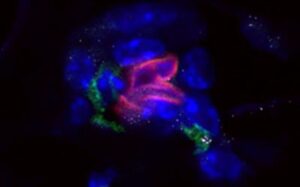
A research team has developed a “self-regulating OLED wound healing patch” that combines light and drugs to pull up the wound recovery speed by about twice.

A research team has developed a “self-regulating OLED wound healing patch” that combines light and drugs to pull up the wound recovery speed by about twice.

A major multi-site clinical trial co-led by researchers at Washington University School of Medicine in St. Louis has shown that post-thrombotic syndrome—a common and often painful complication suffered by many people who have experienced blockages of major veins due to blood clots—can be effectively treated with a minimally invasive procedure.

A Korean research team has developed a low-frequency-based wireless sensor technology.

Learn how an isolated but collaborative bird species shows that close social contact can shape our gut microbes in surprising ways.

By using AI to analyze more than 400,000 Reddit posts, Penn researchers have identified patient-reported symptoms associated with GLP-1s, the popular weight-loss and diabetes drugs semaglutide and tirzepatide, that may not be fully captured in clinical trials or regulatory documents.

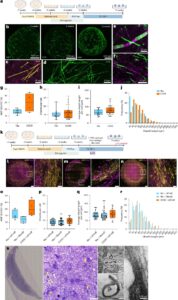
Electrofluidic fibers mimic how natural muscle fibers bundle, and could enable compact, silent robotic and prosthetic systems.

PITTSBURGH, April 9, 2026 /PRNewswire/ — “As a patient care coordinator, I thought there could be a better way to lift, transfer, and move a patient,” said an inventor, from Winchester, Calif., “so I invented the IN HOME MANUAL HOIST. My design offers added assistance, and it could be used in place of patient lifts or hydraulic lifts that are bulky and expensive.”

SNIPE, a newly characterized biological defense system, directly protects bacteria by chopping up invading viral DNA.

Learn how testing different environmental conditions may unlock mammals’ potential to regrow limbs and what it means for wound healing now.

Cardiovascular diseases remain the leading cause of death worldwide, accounting for nearly 20 million deaths each year. Rapid diagnosis and risk assessment of cardiac injury are therefore essential for improving patient outcomes.