
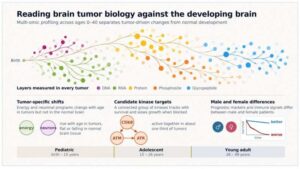
Tumor profiling reveals enzyme as a candidate target in aggressive brain cancer
Researchers at the Icahn School of Medicine at Mount Sinai and collaborators have identified candidate treatment targets and potential prognostic markers for high-grade glioma, an aggressive brain cancer, in children, adolescents and young adults.
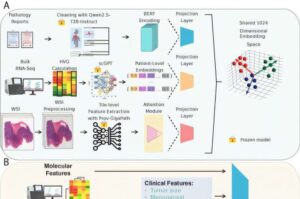
A new AI-powered test offers more accurate prediction of breast cancer recurrence risk
A new study published in the journal npj Breast Cancer demonstrates that an artificial intelligence (AI) model offers more accurate predictions of recurrence risk in patients with early-stage breast cancer than the widely used 21-gene Recurrence Score. This research, conducted by a team from the ECOG-ACRIN Cancer Research Group (ECOG-ACRIN) and Caris Life Sciences, specifically targets hormone receptor-positive (HR+) and HER2-negative disease, the most common subtype of breast cancer, which accounts for about half of all breast cancer cases in the United States.

Cancer biologists bring in the B-cell reinforcements for immunotherapy
Cancer is the second-leading cause of death in the United States, according to a 2026 Cancer Research Institute report. Cancer biologists are keenly aware of this statistic, as it drives innovations that revolutionize cancer care—innovations like immunotherapy. Immunotherapy fights cancer using the body’s own immune system, often by boosting the performance of specialized adaptive immune cells called T cells.

Making invisible cancers visible: A new route to turn ‘cold’ tumors ‘hot’
One of the biggest challenges in cancer immunotherapy may not be that immune cells are too weak, but that some tumors give them too little to see. New research from Dana-Farber Cancer Institute scientists reveals how cancers carrying mutations in the p53 tumor-suppressor protein can hide those mutations from T cells and suggests a therapeutic countermeasure: Change what the cancer displays on its surface so the immune system can recognize the tumor.

Aptitude Announces FDA 510(k) Clearance of Next-Generation Metrix® COVID Test
GOLETA, Calif., Sept. 16, 2026 /PRNewswire/ — Aptitude today announced that the U.S. Food and Drug Administration (FDA) has granted 510(k) clearance for the next-generation Metrix® COVID Test, marking the company’s first FDA 510(k) clearance and the continued expansion of the Metrix molecular diagnostics platform. Development was supported by the Biomedical Advanced Research and Development Authority (BARDA).

New AI technique could make minimally invasive surgeries safer and more precise
This patient-specific method, called xvr, helps doctors use X-rays for surgical navigation in fields such as orthopedics and neurosurgery.
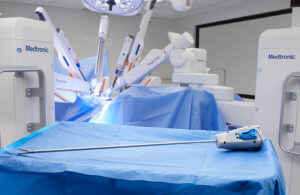
Medtronic grabs FDA clearance to add LigaSure vessel sealer to Hugo
Medtronic (NYSE: MDT) has received an FDA green light to bring its vessel-sealing technology over to its Hugo surgical robot, adding to the platform’s U.S. catalog of energy instruments.

Neptune Medical’s robotic colonoscopy system obtains FDA clearance
Neptune Medical has landed an FDA clearance for its robotic system designed to provide stable control during colonoscopy.