
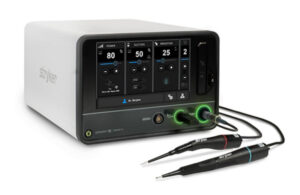
Stryker earns FDA clearance for new bone and soft tissue removal platform
Stryker (NYSE: SYK) earned an FDA 510(k) clearance for its latest ultrasonic bone and soft tissue removal platform, the Sonopet 3.
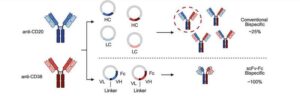
Antibody screening approach could speed development of immune-based cancer treatments
A team led by Harvard Medical School researchers at Beth Israel Deaconess Medical Center and Dana-Farber Cancer Institute has developed a faster way to identify and engineer cancer-fighting therapies.
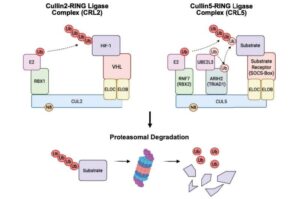
Researchers identify key pathway that drives T-cell exhaustion in cancer immunotherapy
Researchers at the UCLA Health Jonsson Comprehensive Cancer Center used a CRISPR screen to identify a key molecular pathway that drives exhaustion in cancer-fighting immune cells, limiting their ability to keep tumors under control.

Drug-coated balloons could offer an alternative to permanent heart stents for some patients
Thousands of heart patients could be treated without having a metal stent permanently implanted in their arteries—according to research from the University of East Anglia (UEA). A major analysis of more than 7,800 patients found that a newer treatment using drug-coated balloons performed just as well as conventional stents at preventing heart attacks and cardiovascular deaths.
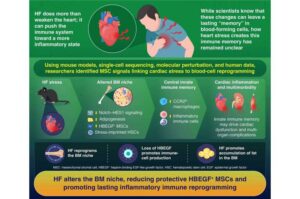
How heart failure reshapes bone marrow to create inflammation-related immune memory
Heart failure (HF) is a condition in which the heart is not able to pump blood effectively. However, its effects go beyond pumping and circulation. HF is also known to cause a lasting form of innate immune memory in stem cells that synthesize blood and progenitor cells that are present in the bone marrow (BM). This can result in the production of immune cells that promote inflammation and worsen heart function. However, the exact mechanism of this process remained unclear.
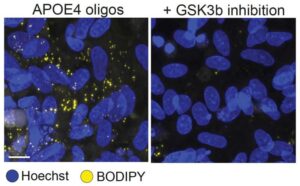
How the biggest Alzheimer’s risk gene disrupts the process of insulating neurons
One of the main ways that the APOE4 gene variant, the biggest genetic risk factor for late-onset Alzheimer’s disease, undermines brain circuit function is by disrupting the process of insulating neurons with a fatty sheath that optimizes their electrical transmission.
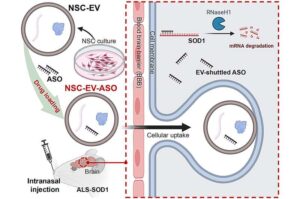
Nasal delivery of ALS treatment in tiny cell-made sacs delays disease onset in mice
One of the great challenges in treating diseases like amyotrophic lateral sclerosis (ALS) is not necessarily finding a promising drug. It is getting the drug to the right place.
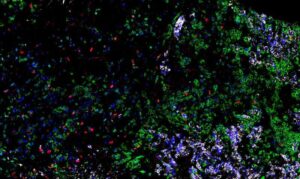
Lab-grown tumors reveal immune cells capable of killing small cell lung cancer
Researchers have uncovered a previously overlooked immune cell that can recognize and kill small cell lung cancer, the most aggressive form of the disease globally. Published in Cancer Cell, the WEHI study found patients with higher levels of these cells lived longer, uncovering a hidden immune defense that could be exploited to attack these hard-to-treat tumors.